
How to Travel With an Electric Heating Pad Safely
Reviewed and updated: October 20, 2026
Travel adds unfamiliar outlets, tight luggage, changing voltage, and hurried setup. A short packing and inspection routine helps keep an electric heating pad from being damaged or used in the wrong setting.
This guide was reviewed against current official product information where a model is discussed. Specifications and packages can change, so verify the exact label or manufacturer page before acting.
Confirm the trip is appropriate for the pad
Read the exact model label and manual before packing. Check voltage, plug type, controller rules, indoor-use limits, and whether an adapter or converter is allowed. A plug adapter changes shape, not voltage. If the manufacturer does not approve travel in the destination, use a different comfort plan rather than improvising with electrical equipment.
Inspect the entire system
Unplug the pad and examine the fabric, seams, cord, controller, plug, and strain-relief points in bright light. Look for discoloration, exposed wire, crushed areas, loose connections, or controls that behave unpredictably. A trip is not the time to test a damaged pad. Retire it or contact the manufacturer when any safety-critical part is questionable.
Pack it flat or gently rolled
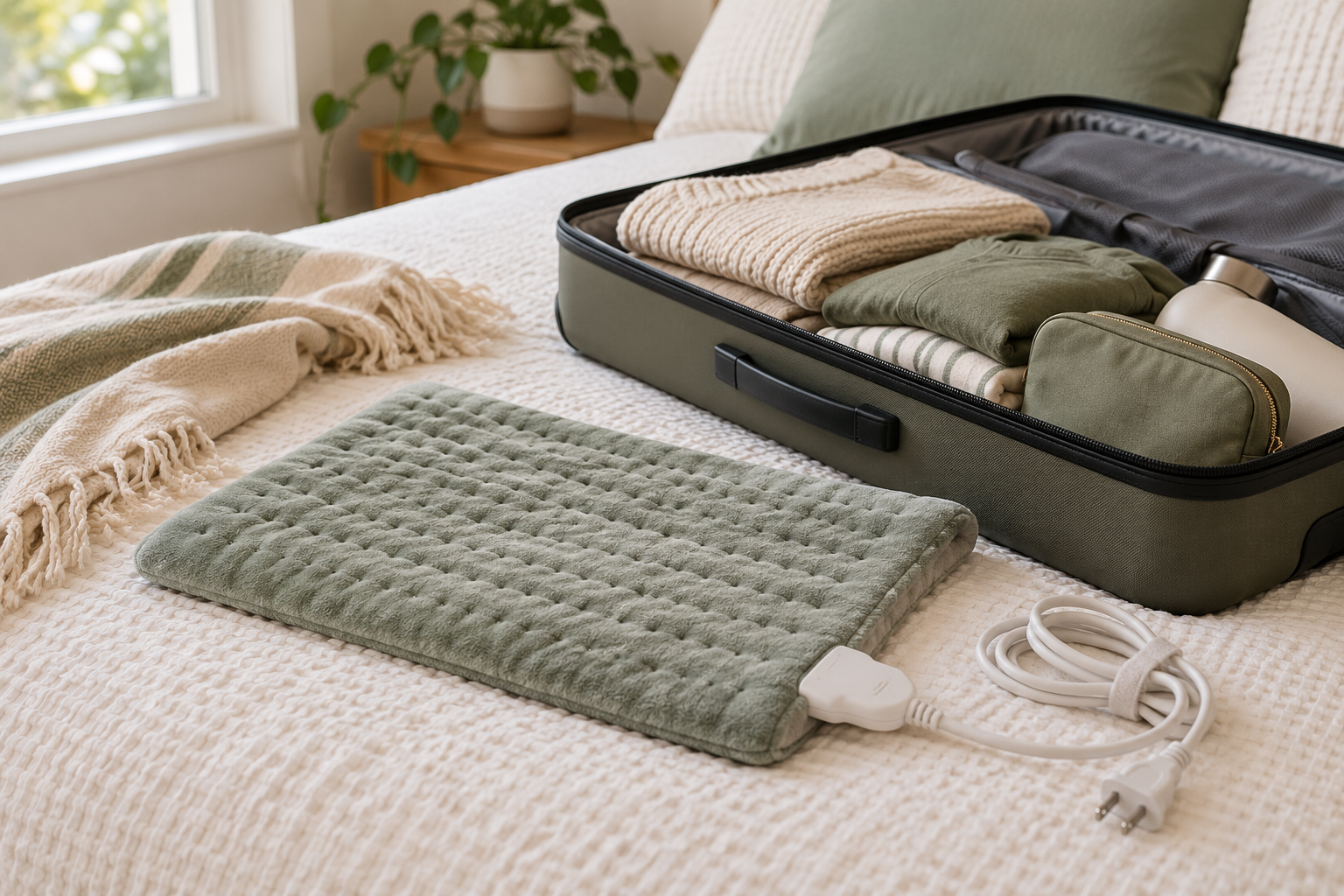
Follow the maker's storage directions. Avoid tight folds, sharp bends, rubber bands, and heavy objects that can crush internal heating elements. Place the controller where its buttons cannot be held down in transit and protect the plug prongs. Keep liquids, toiletries, and sharp items in separate sealed compartments.
Carry the instructions
Save the manual on the phone and photograph the model label, voltage, and support information. If luggage is delayed or a controller is separated from the pad, the record helps identify what belongs together. Never substitute a similar-looking controller, cord, or power supply; matched components can have different electrical specifications.
Check the room before use
Look for a dry, undamaged outlet that matches the product. Keep the pad away from sinks, wet towels, oxygen equipment, flammable items, and bedding arrangements that trap heat. Do not run the cord where people can trip, roll luggage over it, or close it in a door. Ask the property staff about a questionable outlet.
Use heat while awake and attentive
Place the pad only as the instructions allow, without folding, pinning, or lying on top of it unless the model explicitly permits that position. Use the lowest comfortable setting, check skin often, and honor auto-off behavior. Stop for burning, numbness, unusual redness, dizziness, worsening pain, or any electrical odor or sound.
Consider health and medication changes
Travel can bring fatigue, alcohol, unfamiliar medication, altitude, dehydration, and reduced sensation. These can change how safely someone notices heat. People with diabetes, circulation concerns, pregnancy, implanted devices, or reduced sensation should follow professional guidance. Heat should not be used to mask unexplained swelling, injury, fever, or severe pain.
Cool and repack deliberately
Unplug by gripping the plug, let the pad cool fully, and inspect it before returning it to luggage. Do not seal a warm pad beside damp clothing. Repack it in the same protected shape and account for every component. At home, inspect again before normal storage, especially if the bag was dropped, compressed, or exposed to moisture.
Quick checklist
- Verify voltage and plug guidance.
- Inspect cord, controller, and fabric.
- Avoid tight folds and heavy pressure.
- Use a dry suitable outlet.
- Stay awake and check skin.
- Cool fully before repacking.
Why these checkpoints matter
- Verify voltage and plug guidance. This defines the starting condition and prevents the rest of the process from resting on an assumption.
- Inspect cord, controller, and fabric. This narrows the choice to evidence you can verify on the exact label, model, or scene.
- Avoid tight folds and heavy pressure. This checkpoint reduces avoidable risk before another variable is introduced.
- Use a dry suitable outlet. This keeps the routine compatible with the person, product, material, or equipment involved.
- Stay awake and check skin. This creates a repeatable step instead of relying on memory or marketing language.
- Cool fully before repacking. This final review catches changes in condition, availability, or instructions before the next use.
Common questions
Can I use a simple plug adapter overseas?
Only when the pad supports the destination voltage and the manufacturer permits that setup; an adapter alone does not convert voltage.
Should the pad go in checked luggage?
Follow carrier rules and pack it so the heating elements, controller, and cord cannot be crushed or exposed to liquids.
Can I use a hotel extension cord?
Use only connections allowed by the pad manufacturer and the property; avoid overloaded or damaged cords and outlets.
Keep the decision useful
Write down the exact model, label, starting condition, and result. Change one variable at a time and return to the official instructions when anything is unclear. A short record makes the next decision easier and keeps an isolated result from becoming a rule that does not fit a different product, person, material, or environment.
Review the information again before repeating the process. Stop when comfort, safety, condition, or the manufacturer’s instructions provide a reason to stop. A useful routine stays simple because every step answers a real question.
For the next attempt, note what improved, what remained uncertain, and what should stay unchanged. This final check reduces guesswork and helps small problems become visible before they turn into repeated mistakes.
Keep the original instructions, model information, and observations together. Before repeating the process, confirm that the product, setting, environment, and intended result are still the same.
Use the result as one observation rather than a promise. Conditions change, and the safest next step is the one supported by the current label, manual, evidence, and the limits you can verify.
Use the result as one observation rather than a promise. Conditions change, and the safest next step is the one supported by the current label, manual, evidence, and the limits you can verify.
Use the result as one observation rather than a promise. Conditions change, and the safest next step is the one supported by the current label, manual, evidence, and the limits you can verify.
Use the result as one observation rather than a promise. Conditions change, and the safest next step is the one supported by the current label, manual, evidence, and the limits you can verify.
Use the result as one observation rather than a promise. Conditions change, and the safest next step is the one supported by the current label, manual, evidence, and the limits you can verify.
Use the result as one observation rather than a promise. Conditions change, and the safest next step is the one supported by the current label, manual, evidence, and the limits you can verify.