
Weighted Heating Pads: How to Compare Size, Controls, and Fit
Reviewed and updated: November 1, 2026
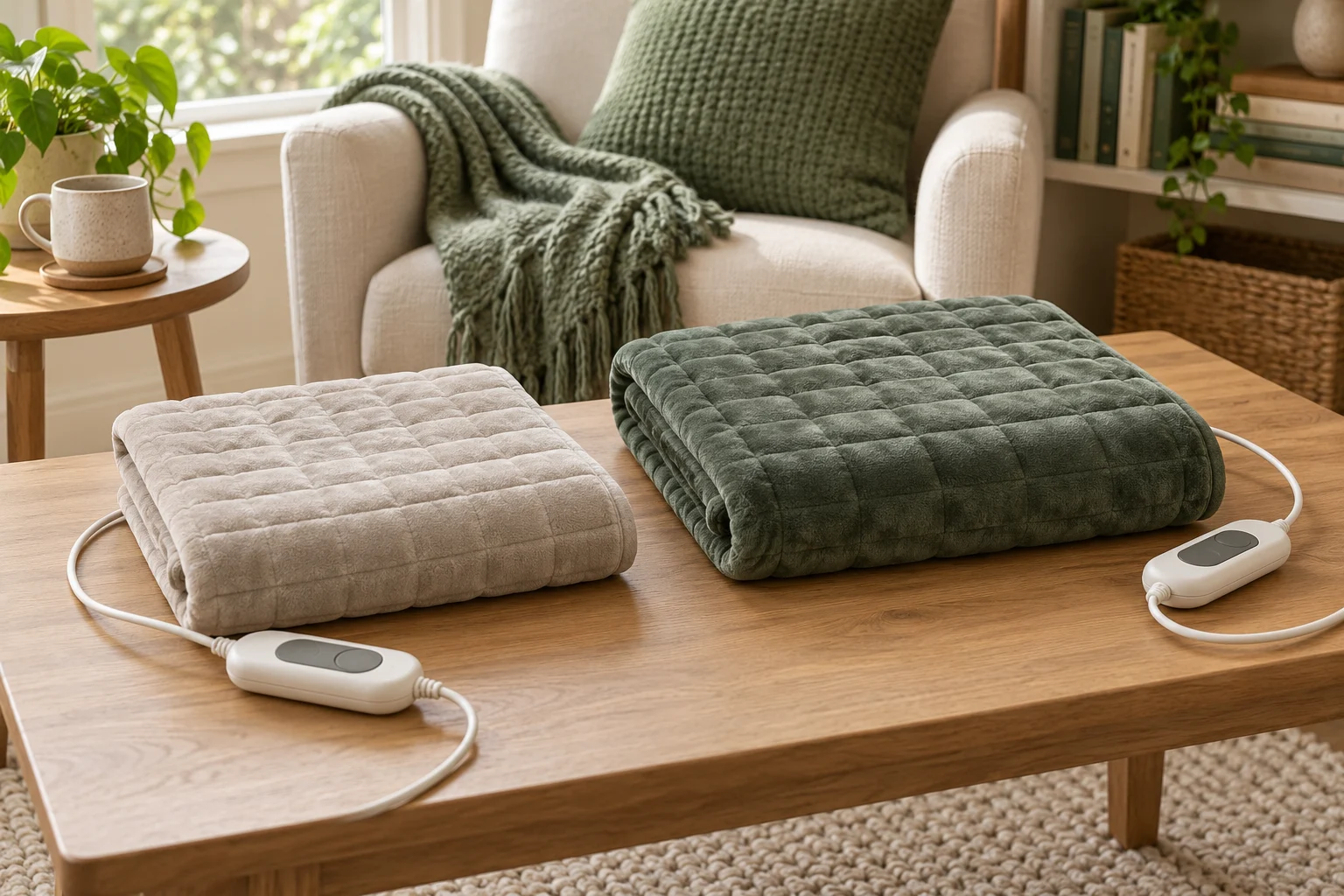
Weighted heating pads combine surface warmth with extra mass, which changes how they drape and how carefully they must be positioned. The useful question is not whether the heaviest or largest pad is “best.” It is whether a particular size, controller, fabric, and weight distribution fit the body area, chair, outlet, and routine you actually use. Heat products also require strict attention to the instructions, skin checks, and session limits supplied with the device.
01
Current option to compare
Pure Enrichment WeightedWarmth Weighted Body Pad with Heat PEWTPLRG
A weighted electric body pad listed in Pure Enrichment’s heat-therapy line. Compare dimensions, controller layout, care instructions and the body area you intend to cover.
View on Amazon (paid link)Check the current listing before you buy.
Decide where the pad will be used
Start with one intended body area. A rectangular body pad may cover the lap, lower back, or shoulders differently. Measure the area while seated or lying in the position you normally use. A pad that looks generous on a bed may bunch behind a chair. A smaller pad may stay centered more reliably. Avoid planning to wrap, fold, pin, or sit on a product unless its instructions explicitly permit that use.
Check the support beneath the pad. Deep sofa cushions can let a heavy pad sink and curl at the edges. A firm chair may keep it flatter but concentrate pressure on cords or controller connections. Make sure the cable can reach the outlet without crossing a walkway. An extension cord is not a substitute for the manufacturer’s electrical directions.
Understand what the weight changes
Added weight can help a pad rest against a broad area without constant adjustment, but it also makes the product harder to lift, position, and remove quickly. Someone with limited strength, sensation, or mobility may need a lighter design or help from another adult. Never use weight to press heat tightly against skin. The pad should rest naturally, not be trapped beneath the body or compressed by furniture.
Weight distribution matters as much as the total. Evenly divided fill compartments can reduce shifting. Large empty channels may let material collect at one end when the pad is carried vertically. Before each use, place the unplugged pad flat and feel for unusual lumps, thin spots, damaged seams, or exposed components. Stop using it if the structure has changed.
Compare dimensions in the position that matters
Product dimensions are measured flat. Your usable coverage will be smaller once the pad curves around shoulders or a lap. Use a bath towel folded to the listed dimensions as a simple mock-up. Sit in the intended chair and see whether the towel reaches the desired area without covering the face, throat, or another area that should remain clear.
Also consider storage. A weighted pad can occupy more shelf space than a standard heating pad, and tight folding may be prohibited. Identify a dry, accessible shelf where the cord and controller will not be crushed. Our guide to storing an electric heating pad safely (paid link) explains why cool-down time and loose cord placement matter.
Controller layout and heat settings
The controller should be readable from the normal use position. Large buttons and clear setting changes are more important than a long list of modes. Confirm whether the pad starts at a default level, remembers a prior setting, or requires a fresh selection. Automatic shutoff is a helpful backup, but it does not replace staying awake and attentive.
Run the controller cable along the outside of the chair or bed where it stays visible. Do not place the controller under blankets, cushions, or the weighted pad. Heat, pressure, and hidden damage are poor combinations. Inspect both ends of the cable and the pad connection before plugging it in. If the connection feels loose or becomes unusually warm, stop using the product.
A current model to evaluate
The Pure Enrichment WeightedWarmth Weighted Body Pad with Heat PEWTPLRG is one current model in the brand’s heat-therapy support materials. Use the Amazon search button in the product card to compare the complete model name and included components. Search results may show other PureRelief or WeightedWarmth products, so match the model carefully and read the instructions supplied with the exact item.
Do not assume that similar-looking pads share the same dimensions, fill, settings, washability, or shutoff behavior. Verify the controller and care label on the received product before use. If the listing and manual disagree, pause and contact the manufacturer rather than improvising. This article does not replace medical guidance or the product manual.
Fabric, cover, and cleaning
Soft fabric can feel comfortable, but plush surfaces may hide small debris, moisture, or seam changes. A removable washable cover can simplify care if the instructions allow it. If the heating element itself is washable, follow the exact disconnection, water-temperature, and drying rules. Never reconnect a component until every permitted washable part is completely dry.
Use the pad with clean, dry skin and the barrier recommended in its instructions. Lotions, topical pain products, and moisture can change how heat feels and may be prohibited. Our pre-use safety check provides a short inspection sequence for cords, covers, controls, and skin before a session.
Plan a conservative first session
Read all warnings before the first use. Begin with the lowest practical setting and a shorter session than the maximum. Stay awake, check the skin regularly, and remove the pad if warmth becomes uncomfortable. Heat sensation can lag behind tissue temperature, so “not very hot” is not proof that a longer session is appropriate.
Do not use an electric heating pad on a person who cannot reliably sense heat, communicate discomfort, or remove the pad, unless a qualified clinician and the product instructions specifically support the plan. Ask a health professional before use when circulation, sensation, pregnancy, recent injury, implanted devices, or other medical circumstances raise questions.
Make the buying decision around routine
A weighted pad is a good fit when its dimensions match one body area, its mass is easy to handle, the controller is reachable, and storage does not require sharp folding. It is a poor fit when the pad must be wrapped, pinned, sat upon, or stretched across a walkway to reach power. Those are routine problems that a larger specification sheet cannot solve.
Compare the exact model, rehearse the placement with a folded towel, and keep the manual. The safest useful product is not the one with the most heat settings; it is the one you can position, monitor, remove, clean, and store correctly every time.