
Cozy Products Toasty Toes: A Desk Fit and Setup Guide
Reviewed and updated: October 30, 2026
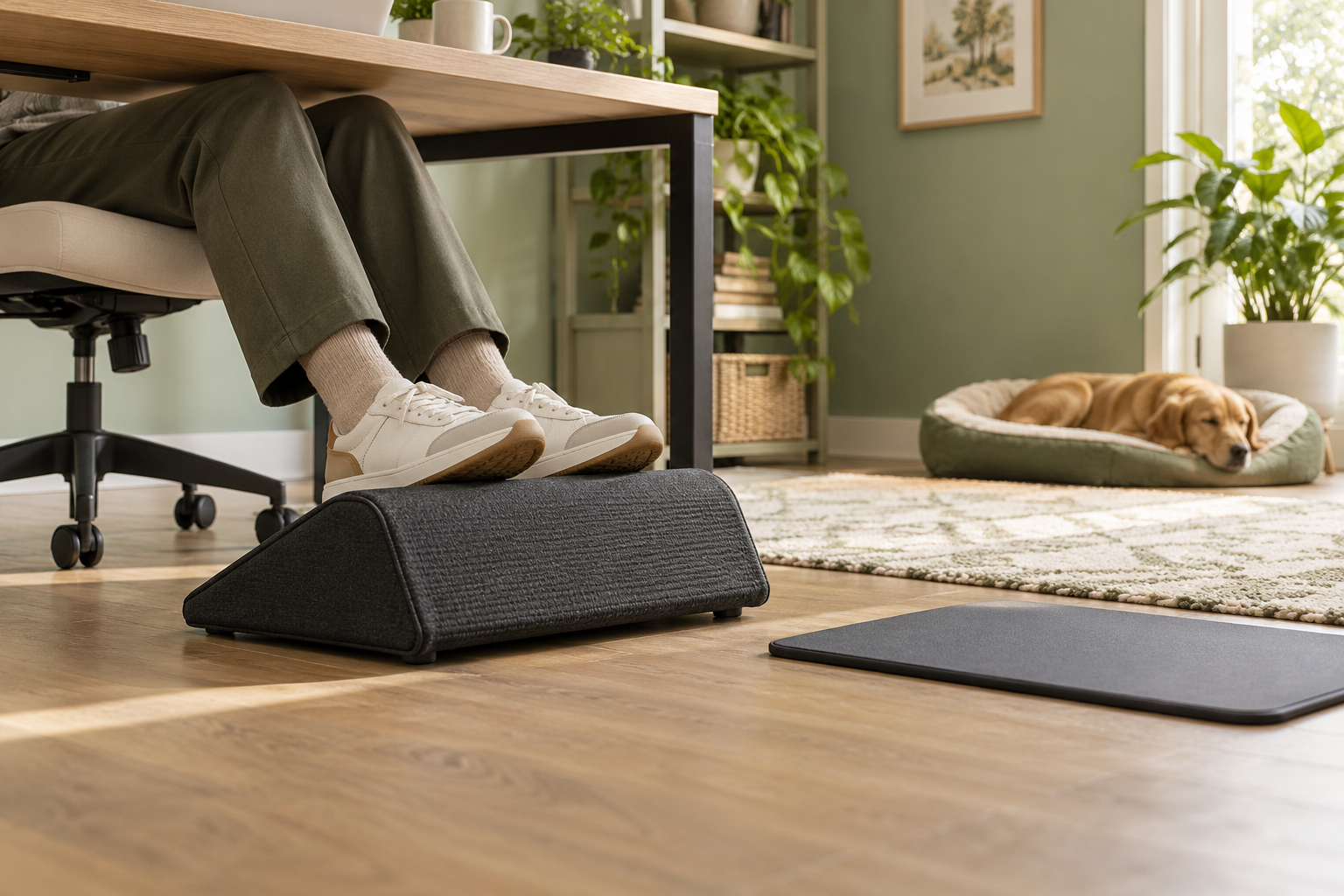
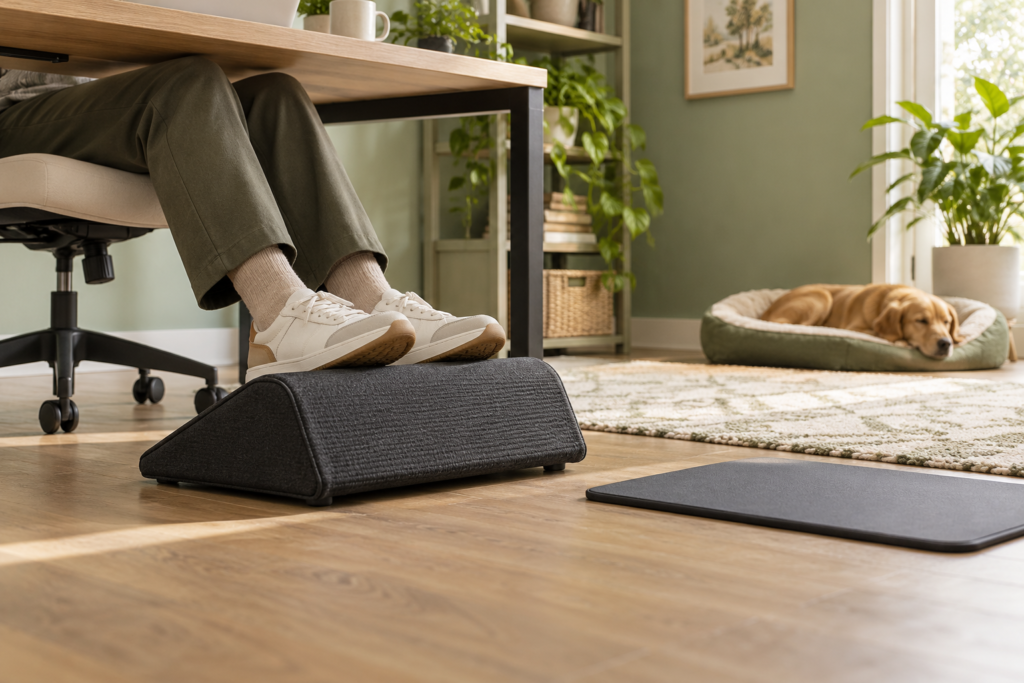
The Cozy Products Toasty Toes is a heated footrest rather than a wearable slipper or a soft heating pad. That distinction matters when deciding whether it belongs under your desk. You need room for the unit, a suitable electrical connection, a clear cord route, and a way to change position without trapping the heater beneath a chair or covering it with other belongings.
Consider it as a comfort appliance, not a treatment for foot pain, poor circulation, or another medical condition. If warmth causes discomfort, or you have reduced sensation or a condition that affects your response to heat, ask a qualified clinician about suitability before using a heated product. An unheated footrest or a change in room conditions may be the more appropriate starting point.
Compare the options
01
Current option to compare
Cozy Products Toasty Toes TT Heated Foot Rest
A 120-volt heated footrest with two settings and manufacturer-approved positions. Check floor space, cord routing, instructions, and personal suitability before use.
View current Amazon search results for Cozy Products Toasty Toes TT Heated Foot Rest (paid link)Check the current listing before you buy.
Understand the current TT model
Cozy Products lists Toasty Toes under model TT. Its specifications identify a 120-volt, 105-watt appliance with two heat settings and a cord approximately six feet six inches long. The stated unit dimensions are about 18.03 by 12.41 by 1.77 inches. The product can be positioned in three configurations described by the manufacturer, including use as a footrest and an upright panel.
These details help with fit and electrical compatibility; they do not establish that every desk arrangement is suitable. Read the current instructions for the exact unit, including approved positioning, footwear requirements, clearances, surface restrictions, and supervision. Follow any warning that is more restrictive than a general suggestion in this guide. Never adapt the appliance to an unsupported purpose.
Measure the space your feet actually use
Measure the available floor area with your chair in its normal working position. Include the space needed to pull the chair back and turn it, not just the empty rectangle beneath the desk. Draw the unit’s approximate footprint on a sheet of paper and place that outline on the floor. Check whether your feet can approach and leave the area naturally.
Look for desk crossbars, filing drawers, loose cables, bags, and chair wheels. A footrest that fits while the chair is parked may become an obstruction as soon as you move. Do not solve a space problem by wedging the unit beneath furniture, stacking items on it, or placing it where someone must step over a cord. Change the arrangement or choose a different approach.
Check the power arrangement before buying
Confirm that your location provides the voltage specified for the actual product. A travel adapter does not automatically convert voltage, and a product intended for one electrical system should not be treated as suitable elsewhere because the plug can be made to fit. Follow the manufacturer’s directions on outlets and any prohibited extension or power-strip arrangements.
Plan a cord route that remains visible and clear of chair wheels, doorways, pinching points, and walking paths. Keep the connection away from spilled drinks and cleaning water. If there is no suitable connection within the permitted arrangement, the desk is not ready for the appliance. Do not stretch the cord taut or hide a questionable connection under a rug.
Decide whether you need heat or support
A cold-feeling workspace can have several practical causes, including drafts, a cool floor, and unsuitable clothing. Try simple room and clothing adjustments before assuming that heat must come from a powered appliance beneath your feet. If the primary issue is where your feet rest, compare an unheated support and your chair setup separately from the question of warmth.
This distinction prevents a product from becoming a substitute for a different adjustment. A heated surface is not automatically the right height or angle for you, and an upright panel is not the same experience as resting your feet on a platform. Use only a configuration allowed by the instructions, and stop if maintaining it requires an awkward or fixed position.
Keep the first use deliberate
Inspect the unit, cord, plug, and controls before use. Do not operate a damaged appliance or one with unclear instructions. Set it up while the area is dry and uncluttered, then follow the manufacturer’s startup and setting guidance. Remain awake, attentive, and able to move away or turn it off without difficulty.
Check comfort and the surrounding setup regularly rather than treating a lower setting as permission to forget the unit. Do not continue through discomfort, unusual heat, odor, or a changing skin response. Stop and follow the product’s instructions for disconnection and assessment. The general habits in our heating product pre-use check can help you remember inspection steps, although the footrest’s own directions control its use.
Prevent covering and accidental contact
A desk changes during the day. A blanket may slide, a bag may be pushed beneath it, or a pet may settle nearby. Maintain the clearances and uncovered arrangement required by the instructions. Do not drape fabric over the heater, use it to dry damp clothing, or combine it with another heated item unless the manufacturer specifically permits that combination.
Think about other people who use the space. Children, pets, visitors, and cleaning staff may not know an appliance is present. Put the unit away appropriately when it cannot be supervised as required. A workplace purchase also needs to fit the employer’s electrical-appliance policy; a product’s modest dimensions do not override that policy or the building’s rules.
Compare it with other foot-warming formats
A rigid heated footrest, a microwave-heated item, and an electric fabric warmer require different routines. Consider whether you want a stationary desk setup, an item that is heated elsewhere, or no powered heat at all. Do not transfer microwave instructions to an electrical product or assume that every foot warmer permits the same type of contact.
Our foot-warmer format guide explains those distinctions and their practical limitations. Choose by the instructions, setting, and ability to use the item attentively. Avoid a purchase justified mainly by a promise that warmth will fix a persistent symptom; symptoms deserve an appropriate assessment rather than an equipment guess.
Check the listing and plan storage
The Amazon action opens a model-specific search. Confirm the Cozy Products name, Toasty Toes TT identity, electrical specification, package contents, and seller’s current terms in the listing you select. Similar-looking mats and footrests are not interchangeable with this model. No Amazon price, stock, rating, or delivery claim is made here.
After use, switch off, disconnect, allow cooling, and store exactly as directed. Keep the cord from being crushed beneath the unit or caught by furniture. If your desk cannot accommodate safe use and storage without improvisation, choose an unheated alternative or improve the room arrangement first. The right comfort purchase should make the routine easier to manage, not create a new obstruction beneath the desk.