
A Heating Pad Pre-Use Safety Check: Cord, Cover, Controls, and Skin
Reviewed and updated: October 18, 2026
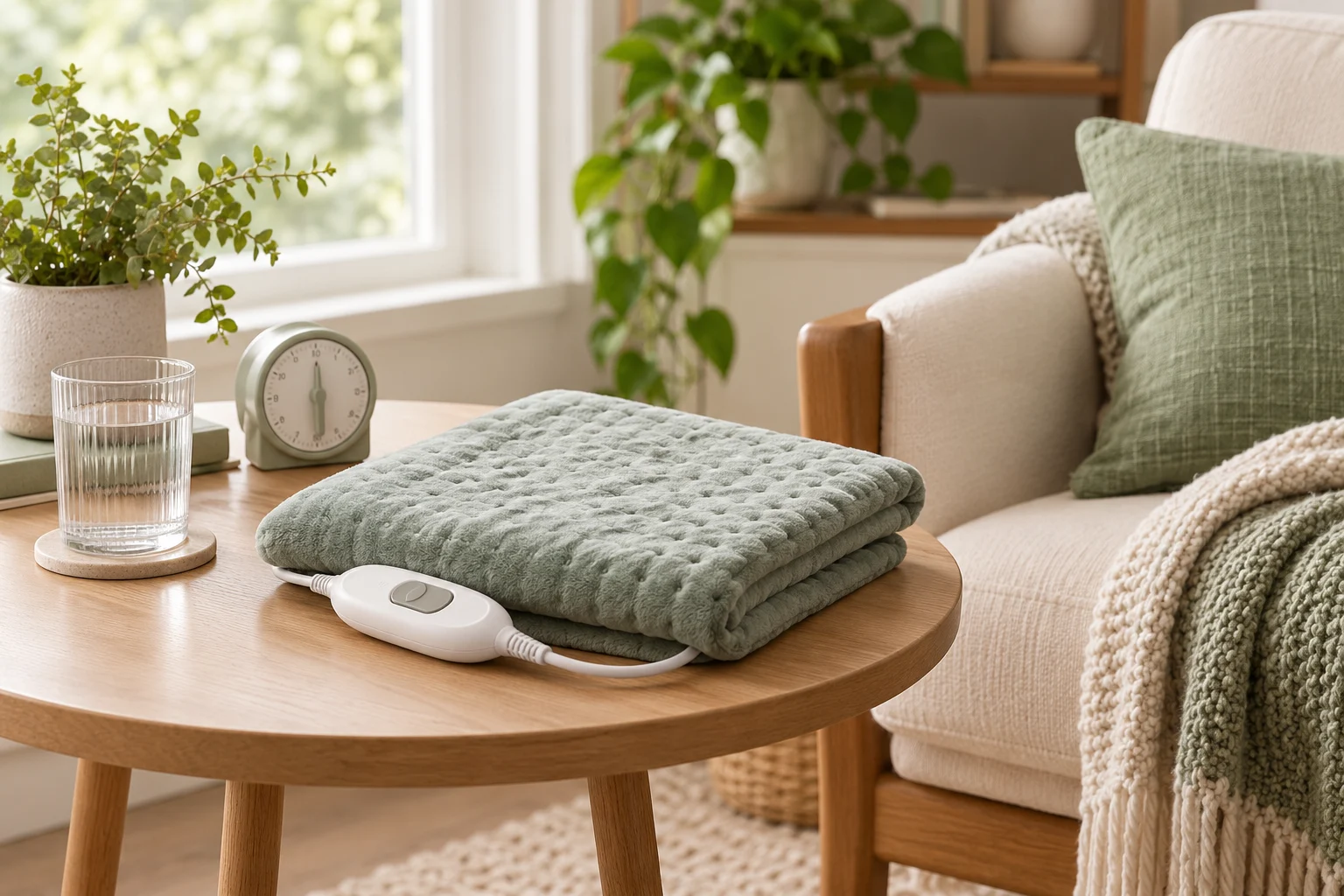
A sixty-second inspection can catch damaged cords, folded heating elements, damp fabric, controller problems, and skin risks before a heating session begins.
This guide was reviewed against current official product information where a model is discussed. Specifications and packages can change, so verify the exact label or manufacturer page before acting.
Read the exact model instructions
Find the label and manual for the pad you are about to use. Similar-looking models can differ in allowable positions, moisture use, washing, controller behavior, and automatic shutoff. Confirm that the controller and pad belong together and that no recall or manufacturer notice applies. If the label is missing or the manual cannot be matched to the model, pause rather than guessing. A general article cannot replace model-specific warnings, especially for electrical heat used close to skin.
Inspect the cord from plug to pad
Unplug the unit and run your eyes and fingers along the cord without bending it sharply. Look for cuts, crushed areas, exposed wire, discoloration, loose prongs, or a connector that no longer seats firmly. Check where the cord enters the controller and pad because repeated flexing can damage those points. Do not tape, splice, or improvise a repair. A damaged cord or plug means the product should remain unplugged until the manufacturer or a qualified professional provides the correct next step.
Check fabric, seams, and heating area
Lay the pad flat as its instructions allow. Look for bunching, hard spots, scorch marks, worn fabric, separated seams, odor, or a heating element that appears displaced. Confirm that the removable cover is the correct one and fully dry. Never fold, pin, crease, or place heavy objects on the pad unless the manufacturer specifically permits that arrangement. Uneven surfaces and trapped heat can create hot spots even when the controller is set low.
Test the controller before contact
With the pad positioned safely and away from skin, plug it directly into an appropriate outlet as directed and start at the lowest setting. Confirm that buttons, lights, timer, and shutoff behave normally. Stay present during the test. Unplug the unit if the controller flickers, becomes unusually hot, smells, buzzes, or changes settings on its own. An automatic shutoff is a backup feature, not permission to sleep with an active pad or leave it unattended.
Check skin and sensation
Look at the intended area before use. Do not place heat over broken skin, unexplained swelling, active bleeding, infection, or an area that cannot sense temperature normally without professional guidance. Reduced sensation, poor circulation, diabetes, pregnancy, implanted devices, medications, and other conditions can change risk. Ask a clinician when the reason for heat or your ability to feel it is uncertain. Stop immediately for burning, numbness, unusual redness, dizziness, or worsening pain.
Set up position and timing
Use the pad on top of the body or in the exact position permitted by the manual; do not lie on it unless the product is designed for that use. Keep the controller uncovered and the cord free from furniture, pets, wheels, and walking paths. Set an external timer that ends before the device shutoff. Begin low and check the skin frequently. Do not combine the pad with topical heating products, another heat source, or a heavy blanket unless specifically approved.
Keep liquids and sleep out of the plan
A washable cover does not make the controller, connector, or heating element safe to soak. Use moist heat only when the exact model instructions allow it and follow the stated method. Keep drinks away from electrical connections. Plan the session while fully awake, and unplug the pad when finished. If you are too tired to stay attentive, delay the session. Heat should be intentional and monitored, not something discovered still running after you wake.
Document changes and retire damage
Take a photo of the label and save the manual. Note a new odor, slow warm-up, intermittent power, or change in heat distribution instead of normalizing it. Clean and store the pad exactly as directed, usually flat or loosely rolled without sharp bends. Replacement is appropriate when safety components are damaged or behavior becomes unpredictable. Do not donate or resell an electrical heat product you would not trust against your own skin.
Quick checklist
- Match the manual to the exact model.
- Inspect plug, cord, controller, and connector.
- Lay the pad flat and check fabric.
- Test controls away from skin on low.
- Confirm normal skin sensation and condition.
- Stay awake, time the session, and unplug.
Why these checkpoints matter
- Match the manual to the exact model. This defines the starting condition and prevents the rest of the process from resting on an assumption.
- Inspect plug, cord, controller, and connector. This narrows the choice to evidence you can verify on the exact label, model, or scene.
- Lay the pad flat and check fabric. This checkpoint reduces avoidable risk before another variable is introduced.
- Test controls away from skin on low. This keeps the routine compatible with the person, product, material, or equipment involved.
- Confirm normal skin sensation and condition. This creates a repeatable step instead of relying on memory or marketing language.
- Stay awake, time the session, and unplug. This final review catches changes in condition, availability, or instructions before the next use.
Common questions
Is automatic shutoff enough protection?
No. It is a backup. Stay awake, monitor the skin, follow the session guidance, and unplug after use.
Can a damaged cord be taped?
No. Keep the unit unplugged and seek manufacturer or qualified repair guidance rather than improvising an electrical repair.
What if the pad heats unevenly?
Stop using it, unplug it, and consult the manufacturer. Hot spots or intermittent heat can indicate damage.
Keep the decision useful
Write down the exact model, label, starting condition, and result. Change one variable at a time and return to the official instructions when anything is unclear. A short record makes the next decision easier and keeps an isolated result from becoming a rule that does not fit a different product, person, material, or environment.
Review the information again before repeating the process. Stop when comfort, safety, condition, or the manufacturer’s instructions provide a reason to stop. A useful routine stays simple because every step answers a real question.
For the next attempt, note what improved, what remained uncertain, and what should stay unchanged. This final check reduces guesswork and helps small problems become visible before they turn into repeated mistakes.
Keep the original instructions, model information, and observations together. Before repeating the process, confirm that the product, setting, environment, and intended result are still the same.
Use the result as one observation rather than a promise. Conditions change, and the safest next step is the one supported by the current label, manual, evidence, and the limits you can verify.