
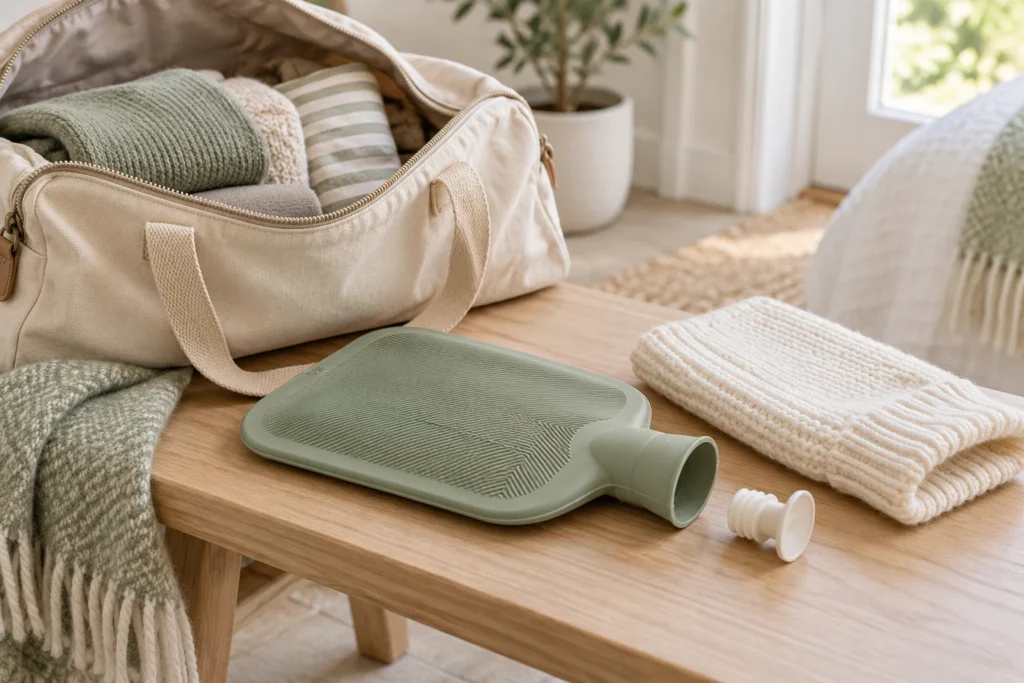
How to Pack and Store a Hot-Water Bottle for Travel
Reviewed and updated: October 31, 2026
A hot-water bottle can be part of a familiar comfort routine, but packing it for a trip needs a little planning. The useful starting point is an empty, dry, undamaged bottle with its own instructions and cover. A suitcase is storage, not a place to carry a filled bottle or keep one warm between stops.
This guide focuses on conventional bottles filled with water. Sealed electric warming bottles, microwave products, and gel packs have different instructions and are outside this packing routine. If you cannot identify the product or find its care directions, resolve that before travelling. Having a bottle with you is useful only when it can be used appropriately at the destination.
Decide whether it suits the trip
Think about where you would actually prepare, use, empty, and dry the bottle. A room without a suitable sink or a safe place to handle water may make the routine impractical. Ask your accommodation about the facilities before adding the bottle to your bag. A kettle in a room does not by itself establish a safe filling setup.
Also consider whether you need the bottle at all. A familiar blanket or extra clothing may meet a comfort need with less preparation. If you are comparing a water bottle with an electrical product you already own, our guide to travelling with an electric heating pad covers a separate set of checks, including power and controller requirements.
Read the care instructions at home
Find the maker’s instructions while you have time to read them properly. Check cleaning, drying, storage, filling, covering, replacement, and user restrictions. Photograph the relevant pages so you can retrieve them without an internet connection. Keep the original identification label intact; a cover should not make the bottle’s condition or markings impossible to inspect.
Do not transfer instructions from an unrelated bottle because the size and color look similar. Materials, closures, and designs vary. If the instructions are missing or contradictory, contact the maker before the trip. Pack the product name and model with your notes so you do not have to reconstruct its identity from a cropped photograph later.
Inspect before making room in the bag
Remove the cover and examine the bottle, neck, seams, and stopper. Do not pack a bottle with visible cracks, wear, brittleness, leakage, or a closure that no longer fits properly. Check its age and replacement guidance as well. A product that has spent a long time in a cupboard does not become travel-ready simply because its cover looks clean.
The Australian regulator’s hot-water-bottle safety guide warns that burns can be serious and advises inspection before use. Follow your product’s instructions and relevant local safety guidance. If suitability is uncertain, leave the bottle out of the trip rather than relying on a cover to hide a problem.
Empty and dry before departure
After the last use at home, let the bottle cool and handle it according to its instructions. Empty it at a suitable sink, with care around anyone nearby. Allow the inside, neck, and outside to dry completely before packing. The regulator recommends drying and storage with the stopper removed; check how your maker describes that process for your bottle.
Start early enough that drying is not the final task before you leave. A towel can dry the outside without removing moisture from inside. Do not apply improvised heat or insert absorbent objects to speed it up. Give the bottle the drying conditions specified in its care directions and keep the area clean while it is open.
Keep the closure and cover together
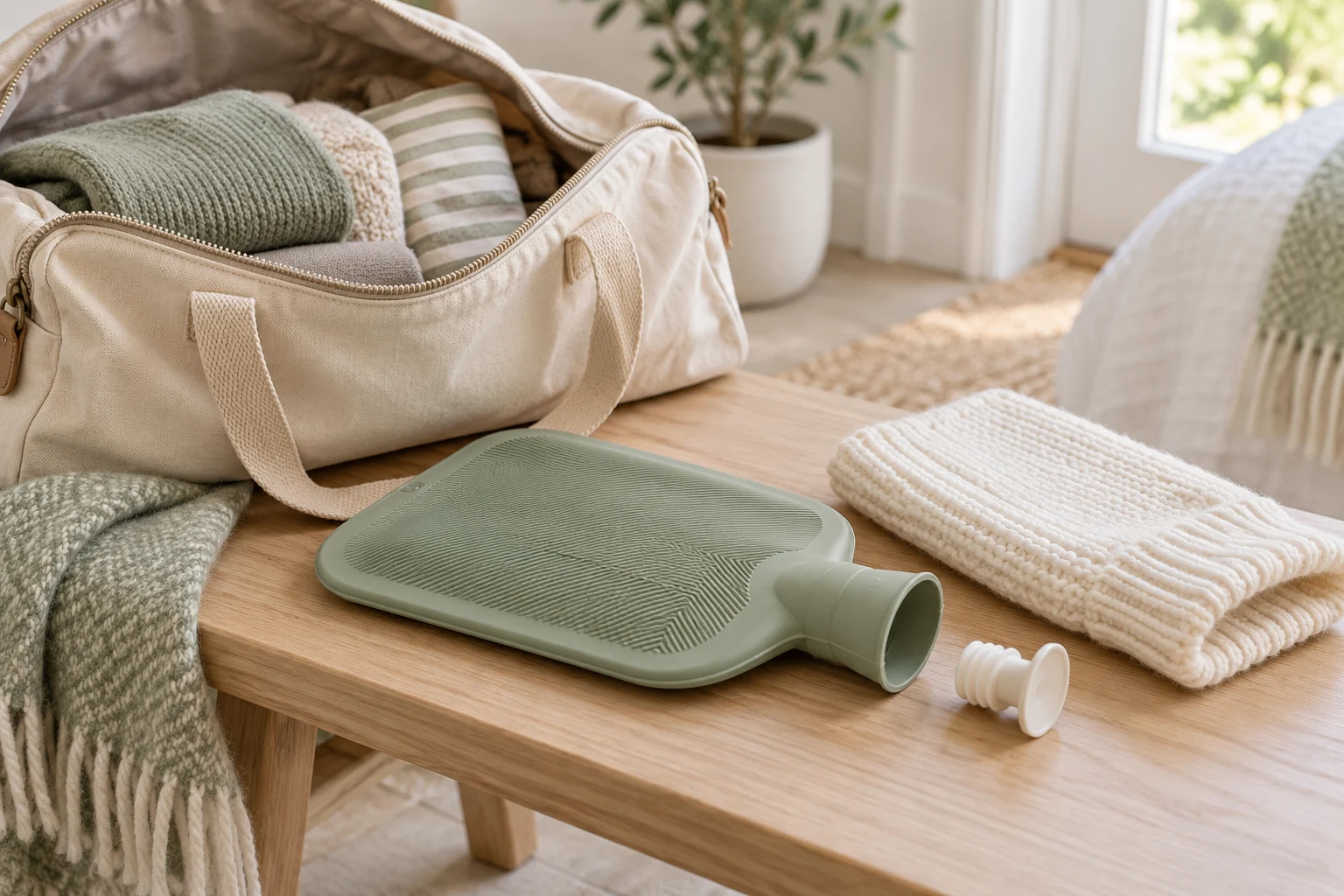
Once everything is dry, organize the components so the stopper does not disappear into a shoe or the bottom of a suitcase. A small clean compartment can hold the closure alongside the bottle’s cover. Avoid a tight packing arrangement that folds the neck sharply, compresses the bottle under heavy objects, or pushes hard against the stopper threads.
The cover should be dry too. Wash it only as its own label permits and allow enough time for seams and thick fabric to dry. A damp knitted cover makes a poor travel pouch. If the bottle and cover have separate care instructions, keep both with the travel notes rather than treating them as one washable item.
Pack around shape and pressure
Choose a protected part of the bag where the bottle can lie in the position its maker permits. Keep sharp toiletries, metal buckles, and hard corners away from it. Leave the bag easy to close; sitting on the suitcase to compress the contents is a sign that the packing arrangement needs changing.
For a car journey, think about temperature and access. Do not leave the bottle pressed against equipment or forgotten in a hot parked vehicle. A travel bag can be moved into the accommodation when you arrive. Keep it away from children’s play items so an adult comfort product is not mistaken for a toy or an ordinary drinking container.
Check again at the destination
Unpack the bottle before you plan to use it. Inspect it after transport and confirm the stopper and cover are the correct ones. Put the instructions somewhere accessible. If a component is missing or the bottle has been damaged, postpone use. Do not substitute a closure from another container or attempt a repair with tape or glue.
Set up at a stable, well-lit sink with adequate space. Follow the bottle’s filling directions, and never use boiling water. Do not fill it while balancing luggage, holding a child, or reaching across another person. A hurried hotel-room routine is a reason to pause, not a reason to skip the preparation you normally follow at home.
Plan the end of the session as well
Use the bottle only as directed, with its cover and without pressure or prolonged direct skin contact. Do not sleep on it. Follow the instructions on duration and user suitability; ask a qualified health professional if heat use is uncertain for you. Packing a familiar item does not remove the need to assess its use in a new setting.
Before using it, decide where it will cool, be emptied, and dry. Keep it away from bedding or luggage that would conceal a leak or retain moisture. For broader storage habits, our heating-pad storage guide discusses keeping comfort equipment organized without crushing or tangling its components.
Allow time before the return journey
Do not schedule the final use immediately before checkout. Leave enough time for the whole care routine, including cooling and complete drying. If the bottle is not ready to pack, change the plan. Putting a damp item into a closed bag to save a few minutes creates an avoidable storage problem for the journey home.
Back at home, unpack it promptly, inspect it again, and store it as instructed. Keep a note of any replacement date or concern discovered during travel. The best travel routine is one you can repeat without rushing: identify, inspect, empty, dry, protect, and reassess before use. If the facilities or timing do not support those steps, choose another comfort option for that trip.