
Heating Pads for Home Therapy: How to Choose and Use One Safely
Reviewed and updated: October 4, 2026
The practical answer
Use the lowest comfortable setting over the supplied cover or a clothing layer while awake. Keep the pad flat, check the skin often, and stop for painful heat, lasting redness, numbness, dizziness, swelling, or worsening symptoms.
A heating pad may temporarily ease stiffness or muscle guarding, but it does not diagnose or cure the cause. Choose a device with clear instructions, adjustable heat, a usable controller, an automatic shutoff, and a size that fits without folding.
Decide whether heat fits the problem
Heat is generally a short comfort measure for familiar stiffness or muscle guarding. It should not be used to diagnose a symptom or push through an injury. Fresh swelling, active bleeding, infection, numb skin, poor circulation, or an unexplained severe symptom changes the decision.
Use the lowest comfortable setting over the supplied cover or a clothing layer while awake. Keep the pad flat, check the skin often, and stop for painful heat, lasting redness, numbness, dizziness, swelling, or worsening symptoms.
Set up the device safely
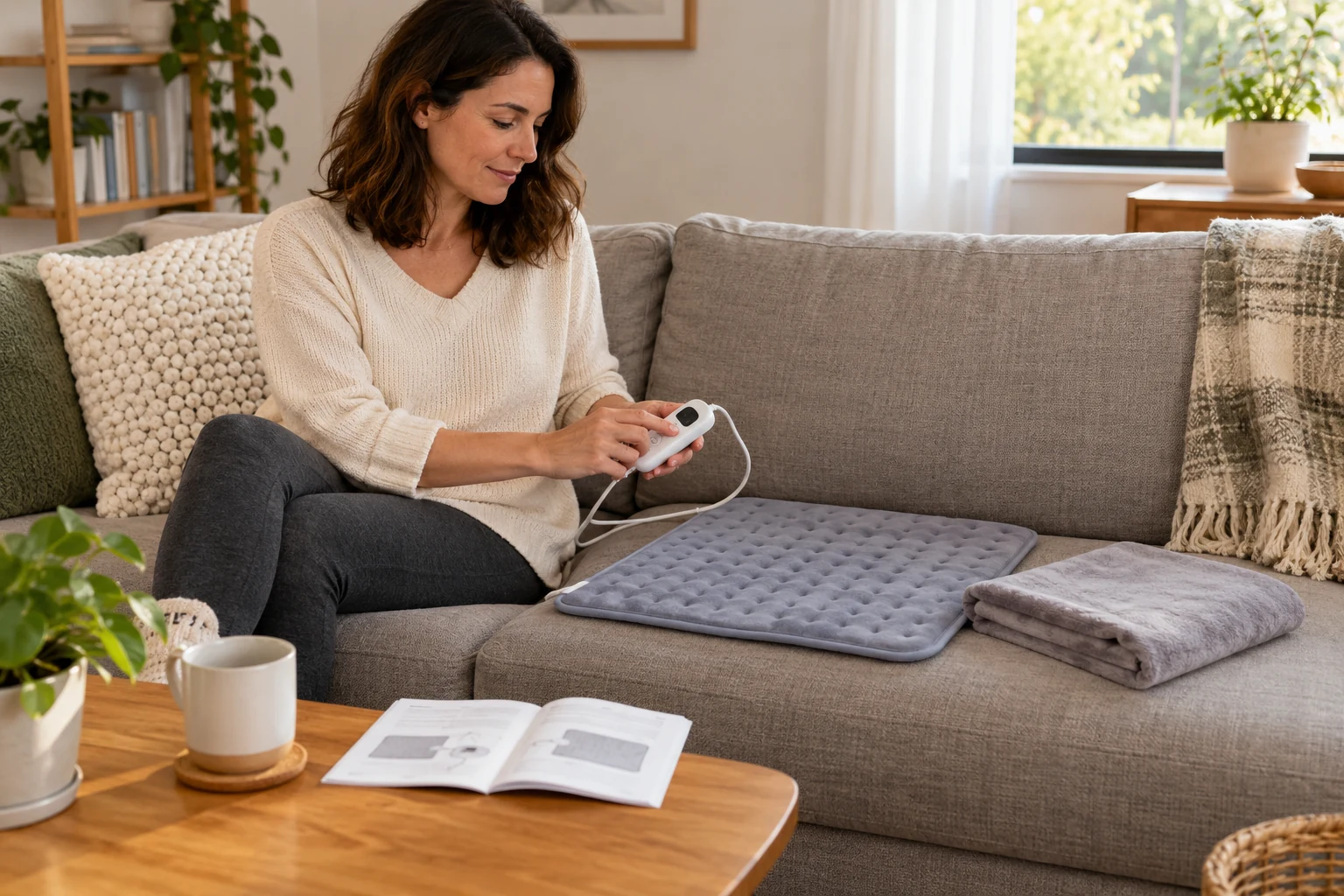
Read the model-specific instructions. Inspect the cord, connector, controller, cover, and pad for damage or uneven heating. Keep the pad flat, use the intended cover or clothing layer, place the controller within reach, and route the cord where it cannot be tripped over or pinched.
Use the lowest comfortable setting over the supplied cover or a clothing layer while awake. Keep the pad flat, check the skin often, and stop for painful heat, lasting redness, numbness, dizziness, swelling, or worsening symptoms.
Use a conservative session
Remain awake and able to move the pad. Start at the lowest useful setting and check the skin often. Heat should feel comfortably warm, never painful, prickling, or numbing. Stop for lasting redness, swelling, dizziness, increased pain, or any change in sensation.
Use the lowest comfortable setting over the supplied cover or a clothing layer while awake. Keep the pad flat, check the skin often, and stop for painful heat, lasting redness, numbness, dizziness, swelling, or worsening symptoms.
Measure function, not just warmth
Choose a modest goal such as easier position changes or gentle range of motion. Compare function before and after the session. Needing higher settings, longer sessions, or more frequent use is a reason to reassess the underlying problem rather than intensify the heat.
Use the lowest comfortable setting over the supplied cover or a clothing layer while awake. Keep the pad flat, check the skin often, and stop for painful heat, lasting redness, numbness, dizziness, swelling, or worsening symptoms.
Know when to seek care
Prompt evaluation is appropriate for major trauma, new weakness or numbness, loss of bladder or bowel control, chest pain, severe abdominal pain, fever, rapidly increasing swelling, a hot red joint, or symptoms that are new, unexplained, or worsening.
Use the lowest comfortable setting over the supplied cover or a clothing layer while awake. Keep the pad flat, check the skin often, and stop for painful heat, lasting redness, numbness, dizziness, swelling, or worsening symptoms.
A repeatable routine
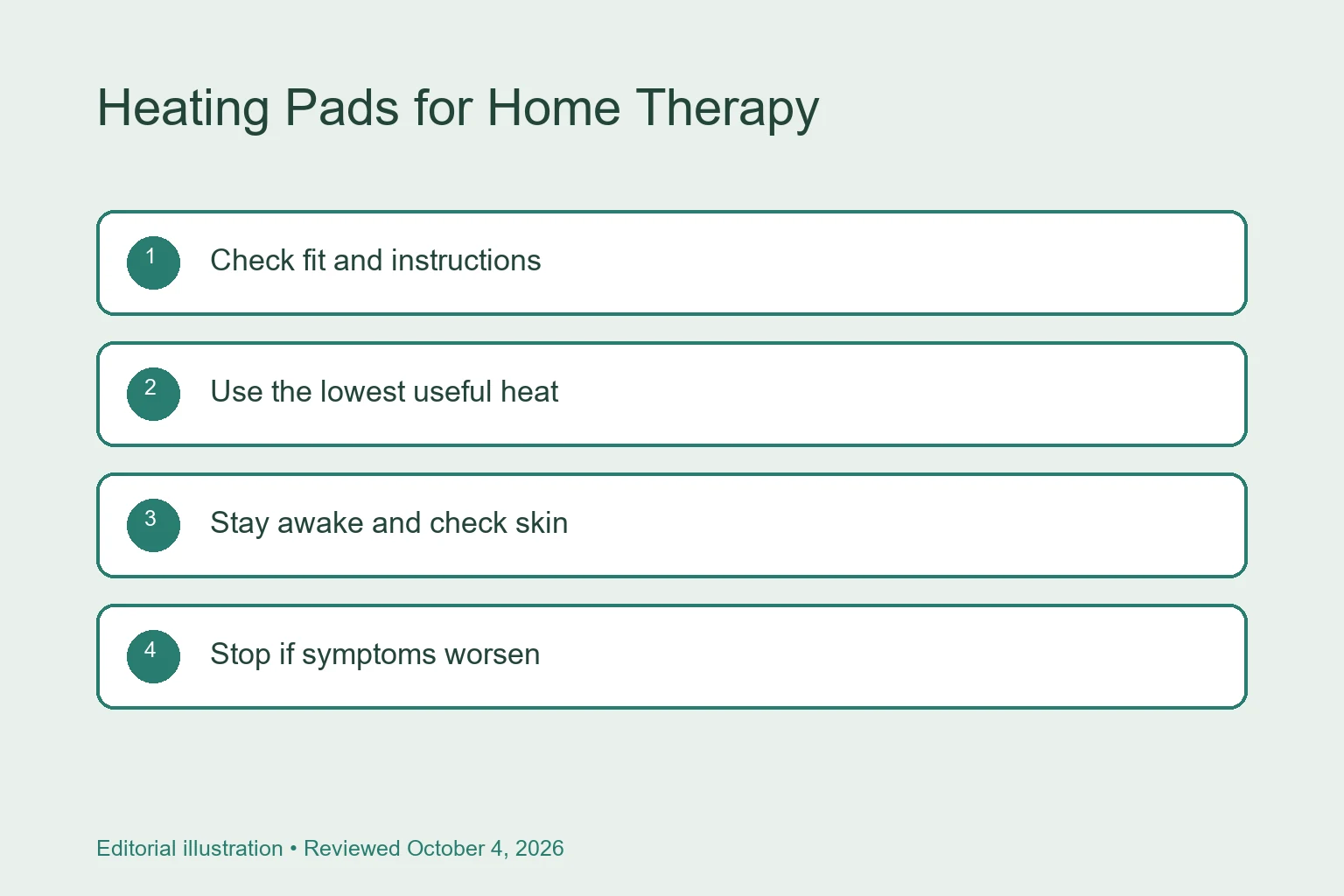
- Check fit and instructions. Work conservatively, follow the instructions, and reassess before adding intensity or another product.
- Use the lowest useful heat. Work conservatively, follow the instructions, and reassess before adding intensity or another product.
- Stay awake and check skin. Work conservatively, follow the instructions, and reassess before adding intensity or another product.
- Stop if symptoms worsen. Work conservatively, follow the instructions, and reassess before adding intensity or another product.
- Unplug and cool the device. Work conservatively, follow the instructions, and reassess before adding intensity or another product.
Common mistakes to avoid
Sleeping with a standard pad, folding it, trapping heat, using damaged equipment, or assuming stronger heat works better can cause burns.
Keep the routine simple enough to repeat. Record the setting, tool, product, or session length, and note delayed changes rather than judging only the first few minutes.
Safety and individual differences
Reduced sensation, poor circulation, fragile skin, sedating medicine, alcohol, pregnancy, childhood, and some medical conditions require extra caution or clinician guidance.
Optional shopping link
If you decide to compare products, view current Amazon search results (paid link). As an Amazon Associate, this site earns from qualifying purchases. Availability and prices can change; confirm the model instructions before buying.
Frequently asked questions
How quickly should I expect a result?
Comfort or appearance can change quickly, but lasting judgment needs repeated use without irritation. Stop if the situation worsens.
Does a stronger setting or more product work better?
No. Use the lowest amount or intensity that achieves the intended result.
What should I track?
Record the tool or device, amount or setting, time, comfort, skin response, and whether normal function improved.
When should I ask for help?
Seek qualified advice for severe, sudden, persistent, spreading, or unexplained symptoms.
Sources and review notes
This guide provides general education and does not replace individual medical care or product instructions.