
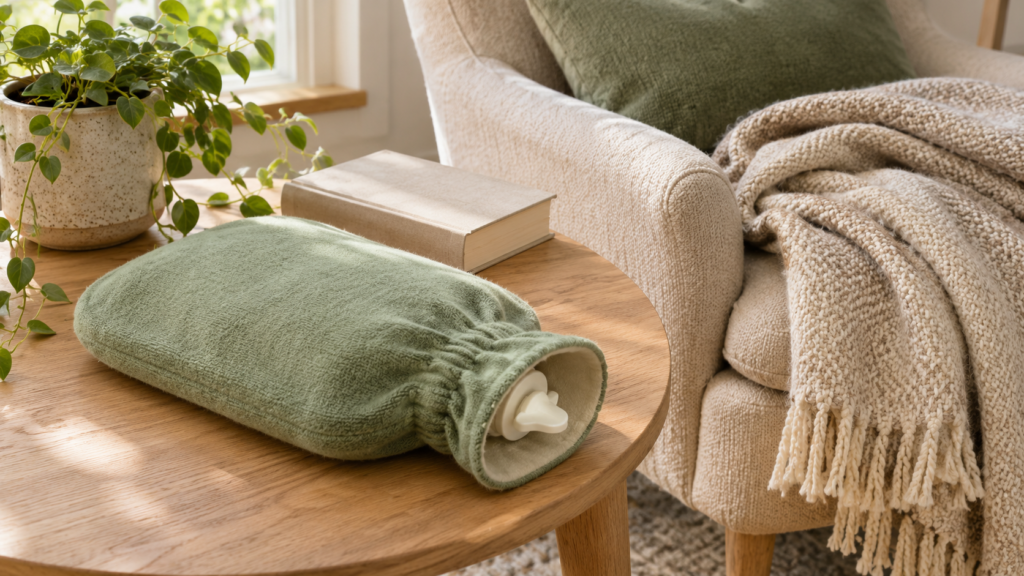
Hugo Frosch Eco Classic Comfort Review: A Firmer Hot-Water Bottle
Reviewed and updated: November 18, 2026
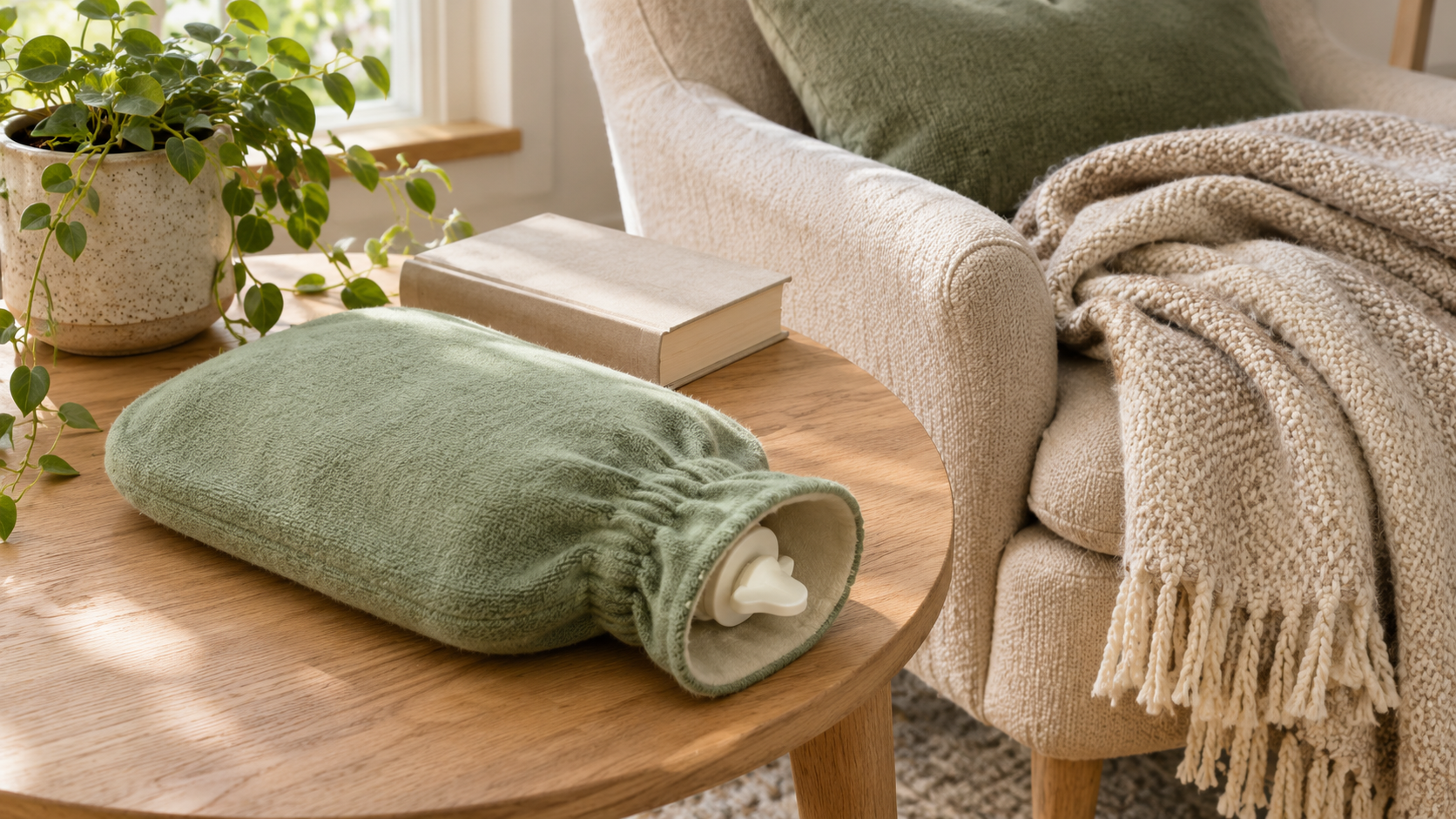
The Eco Classic Comfort’s most interesting feature is hidden beneath its cover. Hugo Frosch makes this hot-water bottle from a material containing more than 90% renewable raw materials, without PVC or phthalate plasticizers. We recommend the 2.0-liter version when that material choice appeals to you and you want a reusable bottle for a quiet, seated warmth break. Its main compromise is the firmer shape: this is not a soft bag you can fold around yourself.
That distinction is more useful than choosing by a cozy cover alone. The Eco bottle keeps its shape when cold and becomes softer after filling with hot water, while still needing careful handling. Pair it with an appropriate removable cover, and it offers a simple alternative to keeping a powered heating pad beside your chair.
A different material, with a different feel
The renewable content gives you a specific reason to consider the Eco range rather than another familiar bottle. The bottle is made in Germany, and its white body has a radiating pattern on both sides. Those details belong to the bottle itself; changing the sleeve does not change its underlying construction.
For everyday use, the shape is the more noticeable consequence. You cannot fold or sharply bend the Eco Classic Comfort. It makes more sense when you want a defined bottle resting comfortably beside you than when you want something that drapes over your shoulders. A loose-filled heat pack is a different proposition for that more flexible placement.
Renewable content should also remain a material preference, rather than a promise of a completely impact-free purchase. It does not mean the bottle is compostable, and it does not establish how long your particular bottle will last. We would choose it because the stated composition matters to you, while accepting the handling and eventual replacement that any hot-water bottle needs.
Choose the Eco Classic Comfort, not just the brand name
Hugo Frosch has several bottle families, so the Eco name and 2.0-liter capacity are useful distinctions. The separate Classic 1.8-liter range is not the same bottle. Our hot-water bottle comparison considers that conventional format alongside other choices; the Eco Classic Comfort earns consideration for its different material and firmer construction.
The bare Eco Classic Comfort bottle is approximately 32 by 19 by 4.5 centimeters. That gives you a practical sense of the space it will occupy before a cover adds bulk. Think about lifting it, setting it down and putting it away, rather than assuming a larger bottle automatically provides a better break.
01
For renewable-material preference
Hugo Frosch Eco Classic Comfort 2.0-Liter Hot-Water Bottle
A thoughtful option for seated warmth when renewable materials matter more to you than a bottle that folds.
Find in Amazon (paid link)
The 2.0-liter figure describes its capacity, not an instruction to pour in two liters of water. Its filling directions leave space below the opening. A filled bottle also brings the weight of its water with it, which matters if carrying hot liquid or turning a stopper is difficult for you.
The cover changes the part you touch
A well-chosen cover makes this otherwise practical object feel more inviting. Hugo Frosch offers the Eco range with different coverings, including softshell, velour, knitted designs and organic-cotton options. Choose around the texture you enjoy and the care you are willing to give it. A decorative finish is a pleasure, but easy access to the bottle is useful too.
The plain white Classic Comfort is sold without a cover, while covered versions are separate combinations. Plan for the protective layer as part of your purchase. An appropriately fitted removable cover lets you uncover the bottle for inspection and clean the fabric separately. Follow that cover’s care label; instructions for one fabric do not establish how another should be washed.
Keep the fabric or other instructed barrier between the hot surface and your skin. A thick or especially soft sleeve does not make prolonged contact harmless. We would favour a cover you can comfortably remove and refit over one whose appearance makes the bottle awkward to inspect.
Filling is part of the ownership decision
The appeal of a bottle is that you can leave the cable behind once it is prepared. The tradeoff comes before you sit down: you need a stable place to fill it, suitable water and enough grip to handle the bottle and its stopper confidently. This format is a better fit when that preparation feels straightforward, not when pouring hot liquid is already a struggle.
Follow the Eco bottle’s own instructions rather than borrowing a squeezing-and-filling method from a flexible bottle. Hugo Frosch specifies non-boiling water at a maximum of 60°C, with the water roughly four centimeters below the opening. Use the original stopper, tighten it by hand without tools, and inspect the closure before use. Those are filling limits, not a recommendation to put the hottest permitted bottle against your skin.
Expect warmth to fade, rather than a setting to hold
Once filled, the Eco Classic Comfort releases stored warmth and gradually cools. There is no controller to turn up halfway through a book. That simplicity is appealing for a defined pause, especially when your favourite chair is inconveniently placed for an outlet. It is less suitable when maintaining adjustable powered warmth is the main reason you are shopping.
An electric pad offers that different kind of control, with its own cable and safety requirements. A microwavable pack replaces water filling with appliance preparation and may offer a more flexible shape. Choose between those experiences first. There is little value in buying a bottle for its material if you actually want a wrap that settles around your shoulders or a pad with selectable warmth.
Look after the bottle as well as the sleeve
Empty the bottle fully after use, protect it from sunlight during storage, and keep it away from oils, fats and hot surfaces. Do not heat it in a microwave or oven, and do not fold it to fit a smaller drawer. Our bottle storage guide (paid link) offers more detail on keeping the bottle and cover manageable between uses.
Regular inspection remains part of owning it: check the body and original stopper for wear, damage or leakage, and replace an unsafe bottle promptly. Follow the manufacturer’s replacement guidance even when the fabric still looks attractive. A fresh-looking cover can hide an ageing bottle, so the appearance of the sleeve should not decide whether you keep using it.
Keep the warmth comfortable
Remain awake, check your skin and remove the bottle if it feels too hot or causes irritation. Do not sit or lie on it, use it as a cushion or fall asleep with it. Reduced sensation, diabetes, circulation problems or difficulty removing it call for individual medical advice first. The Eco instructions exclude heat-sensitive people and anyone unable to care for themselves, and the bottle is not a toy or suitable for children. Stop and seek medical advice for a burn or persistent skin changes.
Our verdict
We would choose the Eco Classic Comfort for its renewable-material composition and simple warmth without a power cable, provided its firmer shape suits you. Buy around the complete bottle-and-cover arrangement you want, and be honest about the filling routine. For a prepared, seated break it is a thoughtful option; for draping warmth or adjustable heat, a different format is the more useful purchase.