
How to Store a Heating Pad Safely Between Uses
Reviewed and updated: October 14, 2026
Let the pad cool before storage
Turn the pad off, unplug it from the wall, and place it on a clean, dry surface until it reaches room temperature. Do not slide a warm pad into a drawer, basket, or plastic bin. Trapped heat and a tightly packed cord make it harder to notice damage and may stress the materials over time.
Cooling time depends on the product, setting, and room. Use touch rather than a fixed countdown, and follow the storage instructions in the manual. If the controller or plug feels unusually hot, smells scorched, or shows discoloration, stop using the pad and contact the manufacturer.
Disconnect removable parts only as directed
Some pads have a detachable controller or cord so the fabric cover can be washed. Unplug the wall end first, then separate the connector exactly as the manual describes. Pull on the molded connector rather than yanking the cable. Never force a plug that seems stuck or use a detachable controller with a different pad.
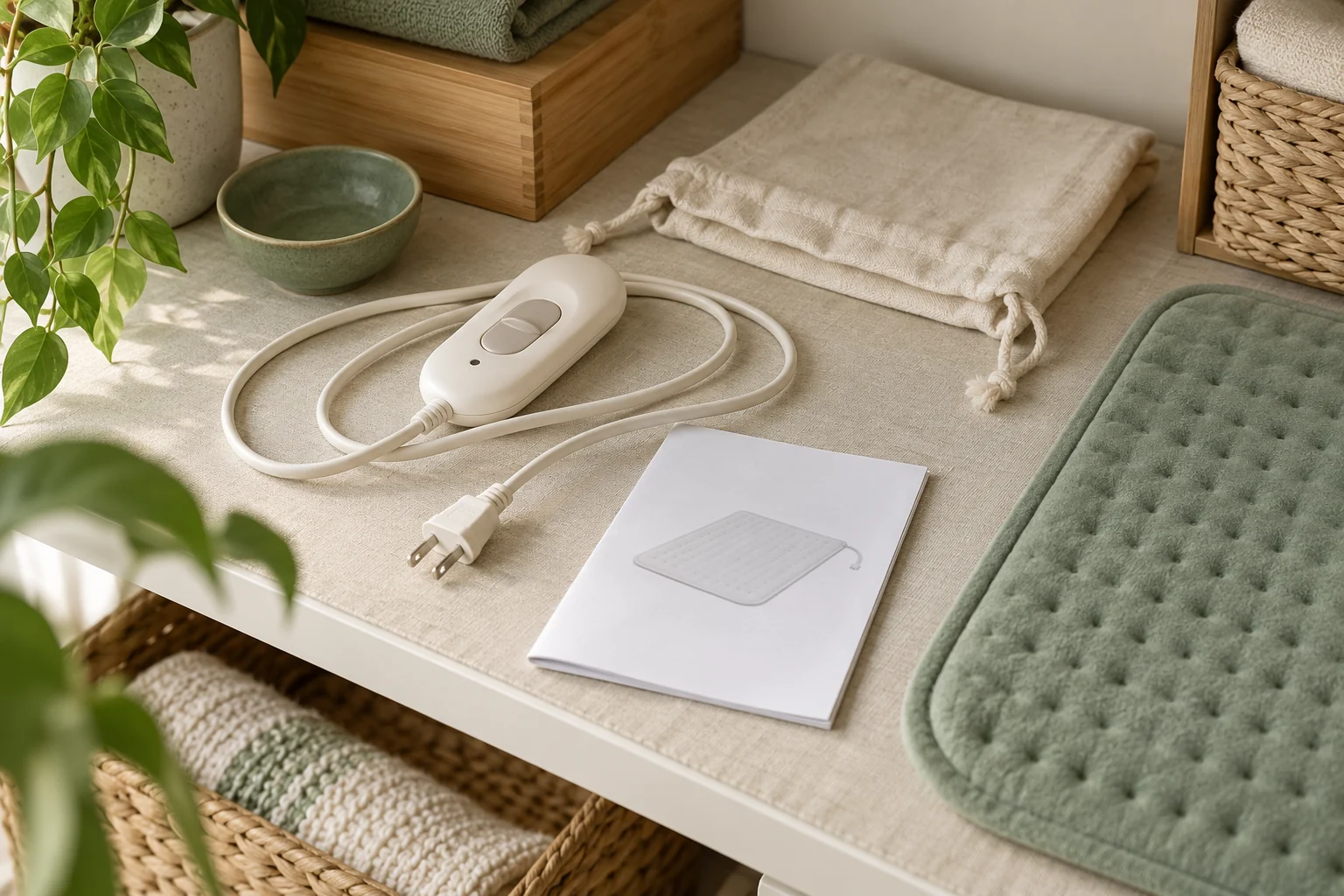
Keep the controller and pad together so they are not mixed with similar-looking equipment. A labeled breathable bag or shelf bin works well. Include the manual, especially if several people use the product or if the controls have special timer behavior.
Avoid sharp folds and heavy objects
Heating elements and internal wiring can be damaged by repeated creasing. Lay the pad flat when space allows, or roll it loosely if the manufacturer permits rolling. Do not make a tight square, secure it with a rubber band, or wedge it beneath a stack of blankets. Never place books, boxes, or other heavy items on top.
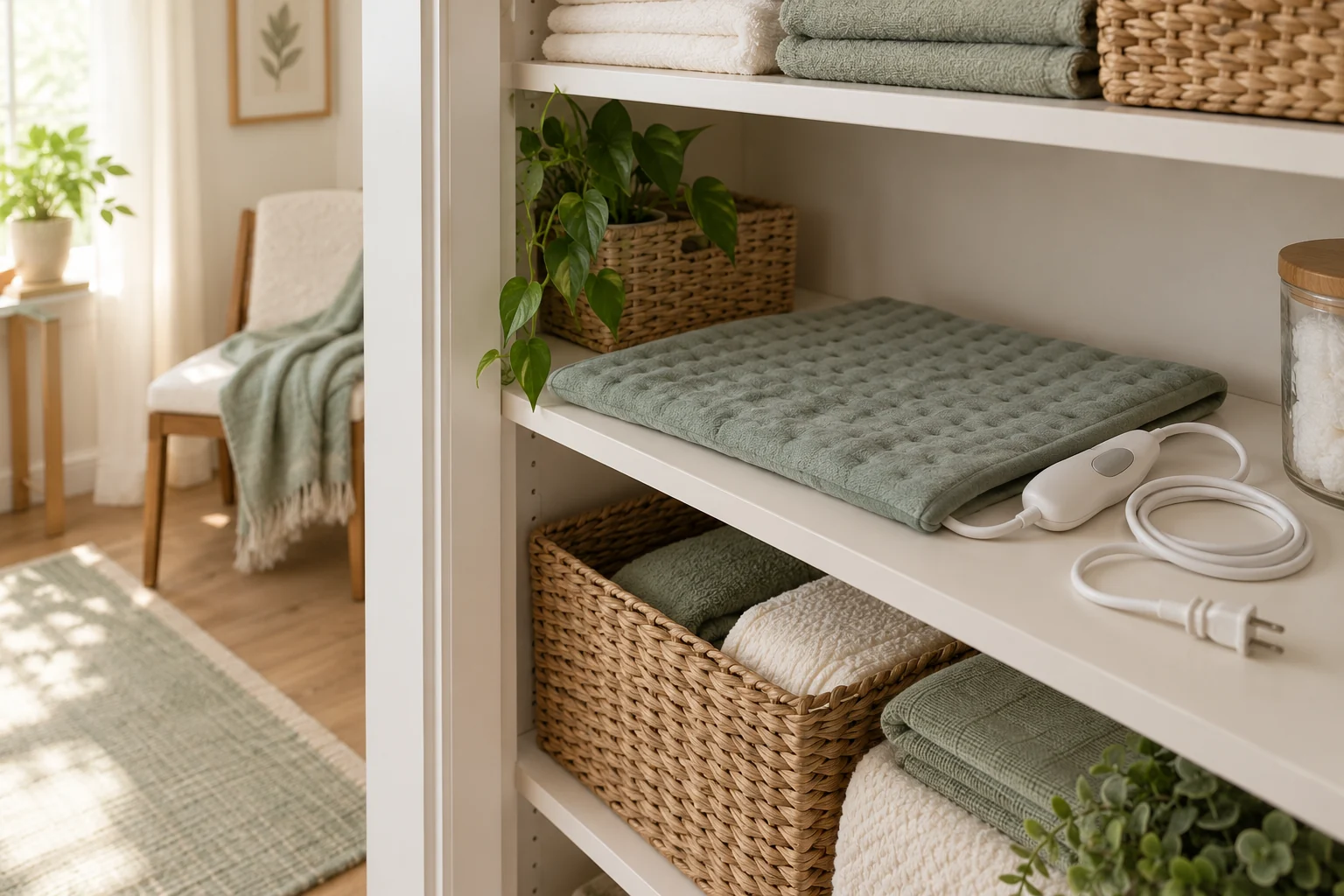
A dedicated shelf is often safer than a crowded drawer. If the pad must go into a container, choose one long enough that it rests naturally. The controller should sit beside the pad rather than pressing into the heating surface.
Coil the cord with a relaxed loop
A tight cord wrapped around the controller can strain the points where the cable enters the plug and control. Make broad, loose loops that follow the cord's natural curve. A soft reusable strap can hold the loops without pinching them. Leave both ends visible so you can inspect them next time.
Do not use the cord as a handle. If the insulation is cracked, crushed, frayed, or pulled away from a connector, retire the product until the manufacturer confirms an approved repair or replacement. Tape does not restore the original electrical protection.
Choose a dry, easy-to-reach location
Store the pad away from sinks, bathtubs, leaking pipes, damp basements, and direct sunlight. A linen closet shelf or bedroom cabinet is often suitable if it stays dry and is not overloaded. Avoid areas where a child or pet can pull the cord down.
A pad stored in a guest room should be easy for an adult to find and inspect. Do not tuck it behind furniture where the cord can be pinched. If you use the pad regularly, a shallow open basket on a stable shelf can be more practical than a sealed tote.
Wash and dry only according to the label
A removable cover may have different care instructions from the electrical pad. Check both labels. Some covers can be machine-washed while the pad requires spot cleaning; other models allow limited washing after the controller is detached. Never assume that a soft fabric exterior makes the entire unit washable.
The product must be fully dry before reconnection and use. Moisture can remain around seams and connectors longer than the surface suggests. If the manual is missing, look up the exact model on the manufacturer's official site rather than borrowing instructions from a similar pad.
Inspect it before every new use
Storage is only half of the routine. Before plugging in, spread the pad out and look for cuts, exposed wire, darkened areas, stiff spots, unusual lumps, or a controller that has cracked. Check that the cord is not trapped under a chair or bed. A pad that has been folded sharply may deserve closer attention even if the fabric looks normal.
Test the controls while awake and present. Confirm that the timer and heat levels behave as expected. Stop if heat is uneven, the controller flashes an unexplained error, or the product smells different from normal. The manufacturer can interpret model-specific error codes.
Keep heat use conservative
A heating pad is for short, supervised comfort, not a substitute for medical evaluation. Use the lowest effective setting, place a layer between the pad and bare skin when directed, and do not sleep on or with an electric pad unless the exact product is designed and labeled for that use. Avoid using heat on skin with reduced sensation without medical guidance.
Our overview of what to know before using a heating pad covers more precautions, while the guide to heating pad types explains how electric, microwavable, and chemical options differ. Each type needs its own storage method; a grain-filled microwavable pack, for example, should be kept dry and checked for scorching or odor.
A storage checklist you can repeat
After use: switch off, unplug, cool completely, inspect, and clean only as directed. Arrange the pad flat or in a loose roll, make broad loops in the cord, place the controller beside it, and store everything in a dry location without weight on top. Keep the manual with the product.
Before use: inspect the fabric, cord, connectors, and controller; confirm the pad is dry; and review any model-specific instructions. A two-minute check is more valuable than an elaborate storage system. If anything looks or feels wrong, do not test it against your body. Ask the manufacturer whether the unit should be replaced.
Replace rather than improvise
Electrical heat products are not good candidates for household repair. A mismatched controller, replacement cord from another model, homemade splice, or taped crack can create a hazard even when the pad appears to turn on. Use only parts and procedures approved for the exact model. Check the product label for a model number before contacting support.
If a pad has been recalled, flooded, chewed by a pet, crushed in furniture, or stored for years with a hard crease, do not rely on a quick warm-up test. Check the manufacturer and CPSC recall resources, then follow local instructions for electronic or battery disposal when applicable. Cut the cord only if a disposal authority directs you to do so, and keep a retired unit out of reach until it leaves the home.