
Best Microwavable Heat Packs: Fill, Shape, Scent, and Safety
Reviewed and updated: October 19, 2026
Microwavable heat packs trade cords for a specific heating routine. Compare fill, shape, scent, cover, cleaning, and exact microwave directions before choosing one.
This guide was reviewed against current official product information where a model is discussed. Specifications and packages can change, so verify the exact label or manufacturer page before acting.
Decide where the pack will rest
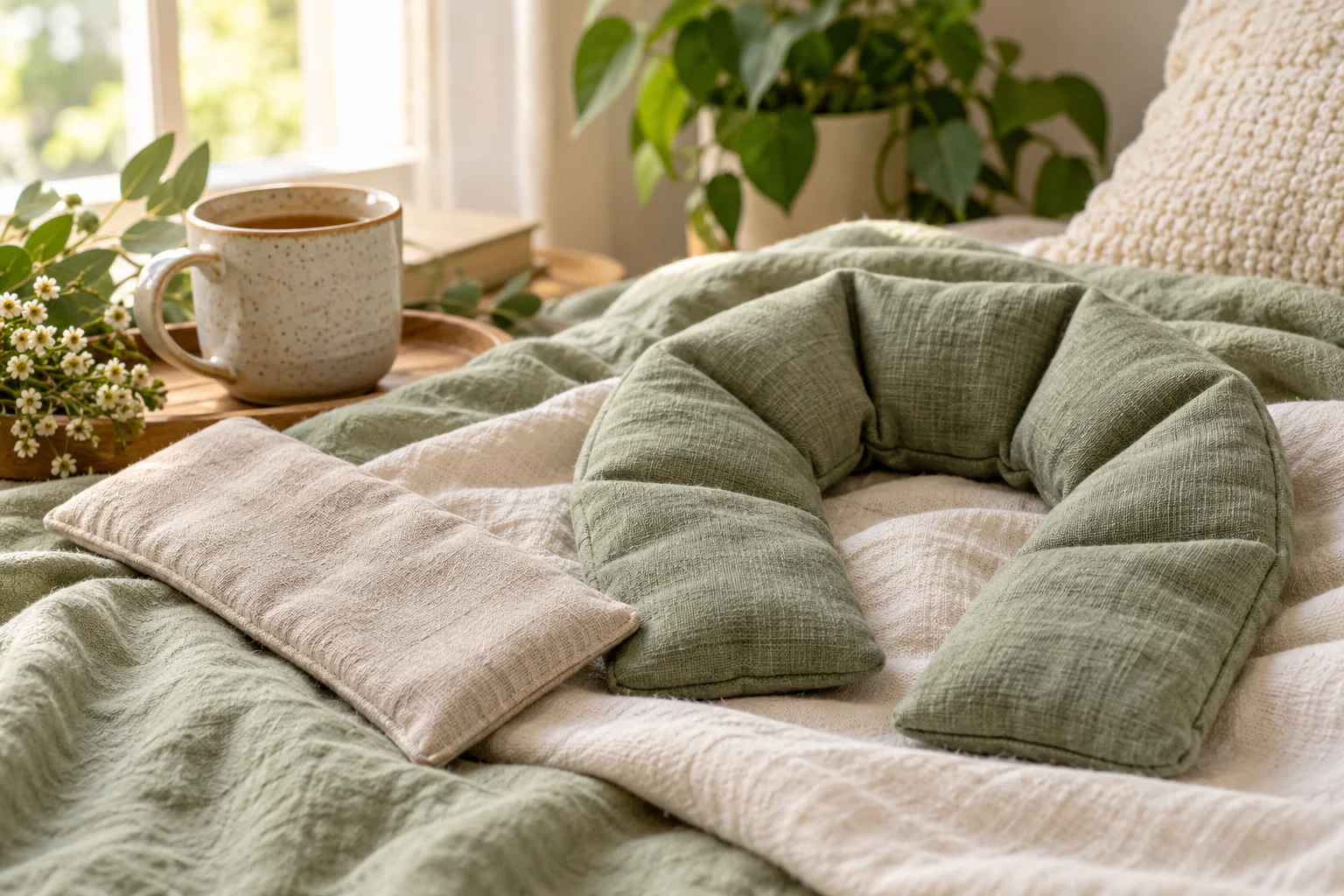
A long neck wrap, flat lumbar pad, eye pillow, and slippers place heat differently. Choose a shape that sits without being folded, pinned, or compressed under body weight. Measure the intended area and confirm the manufacturer permits that position. Heat should never restrict breathing or circulation.
Read the exact heating directions
Microwave power, turntable size, pack weight, and starting temperature affect heating. Use only the time and wattage guidance attached to the exact product, and heat from room temperature unless the instructions say otherwise. Never copy a time from a similar-looking pack or add extra minutes because the surface feels uneven.
Compare fill and scent
Common packs contain grain, clay beads, flax, or other heat-retaining fill. Some add lavender or another fragrance that cannot be removed. Check allergy, scent sensitivity, ingredient disclosure, and storage guidance. A pleasant scent for one person can trigger headache, nausea, asthma symptoms, or skin irritation in another.
Use current products as references
Warmies currently sells microwavable wraps filled with natural grain and French lavender, while My Heating Pad lists several unscented or herb-filled shapes. Product families change, so match the exact size, filling, cover, and instructions. Do not treat a general marketplace phrase such as microwave heating pad as a complete model identity.
Test temperature before contact
After heating, knead or redistribute the fill only if instructed, then test the pack with the inside of the forearm. Use a clean cover or fabric layer when the directions call for one. Check skin frequently and stop for burning, numbness, unusual redness, dizziness, or worsening pain.
Account for skin and medical risk
Do not use heat over broken skin, unexplained swelling, active bleeding, or an area with reduced sensation without professional guidance. Diabetes, circulation problems, pregnancy, implanted devices, medication, and other conditions can change risk. Ask a clinician when the reason for heat or the ability to sense temperature is uncertain.
Inspect and store the pack
Before every use, look for torn seams, dampness, scorch marks, odor changes, leaking fill, or contamination. Keep the pack dry unless its instructions explicitly allow another method. Let it cool completely before reheating and store it away from pets, pests, and moisture. Retire any damaged pack.
Choose the simplest safe routine
Choose a scented wrap only when everyone using it tolerates the fragrance, an unscented flat pack when flexibility matters, or a shaped product when its fit reduces bunching. Verify official care and heating instructions first, then compare current paid listings. Availability remains unverified while Amazon API eligibility is blocked.
Quick checklist
- Match the shape to the body area.
- Read model-specific microwave guidance.
- Confirm fill and fragrance tolerance.
- Test heat before skin contact.
- Stay awake and check skin often.
- Retire wet, scorched, or torn packs.
Why these checkpoints matter
- Match the shape to the body area. This defines the starting condition and prevents the rest of the process from resting on an assumption.
- Read model-specific microwave guidance. This narrows the choice to evidence you can verify on the exact label, model, or scene.
- Confirm fill and fragrance tolerance. This checkpoint reduces avoidable risk before another variable is introduced.
- Test heat before skin contact. This keeps the routine compatible with the person, product, material, or equipment involved.
- Stay awake and check skin often. This creates a repeatable step instead of relying on memory or marketing language.
- Retire wet, scorched, or torn packs. This final review catches changes in condition, availability, or instructions before the next use.
Common questions
Can I reheat a pack immediately?
Wait until it returns to room temperature unless the exact instructions say otherwise.
Can I wash the whole pack?
Only when the manufacturer explicitly permits it; many filled packs are spot-clean only.
Is longer heating better?
No. Extra heating can cause burns, fire, or product damage. Follow the exact time and wattage guidance.
Official product references
Compare current Amazon listings
Warmies microwavable neck wrap
Confirm the exact model, package contents, seller, current price, and availability before ordering.
unscented microwavable heat pack
Confirm the exact model, package contents, seller, current price, and availability before ordering.
flaxseed microwavable heating pad
Confirm the exact model, package contents, seller, current price, and availability before ordering.
Keep the decision useful
Write down the exact model, label, starting condition, and result. Change one variable at a time and return to the official instructions when anything is unclear. A short record makes the next decision easier and keeps an isolated result from becoming a rule that does not fit a different product, person, material, or environment.
Review the information again before repeating the process. Stop when comfort, safety, condition, or the manufacturer’s instructions provide a reason to stop. A useful routine stays simple because every step answers a real question.
For the next attempt, note what improved, what remained uncertain, and what should stay unchanged. This final check reduces guesswork and helps small problems become visible before they turn into repeated mistakes.
Keep the original instructions, model information, and observations together. Before repeating the process, confirm that the product, setting, environment, and intended result are still the same.
Use the result as one observation rather than a promise. Conditions change, and the safest next step is the one supported by the current label, manual, evidence, and the limits you can verify.
Use the result as one observation rather than a promise. Conditions change, and the safest next step is the one supported by the current label, manual, evidence, and the limits you can verify.
Use the result as one observation rather than a promise. Conditions change, and the safest next step is the one supported by the current label, manual, evidence, and the limits you can verify.
Use the result as one observation rather than a promise. Conditions change, and the safest next step is the one supported by the current label, manual, evidence, and the limits you can verify.