
Best Heated Massage Seat Cushions for Home and Office
Reviewed and updated: October 21, 2026
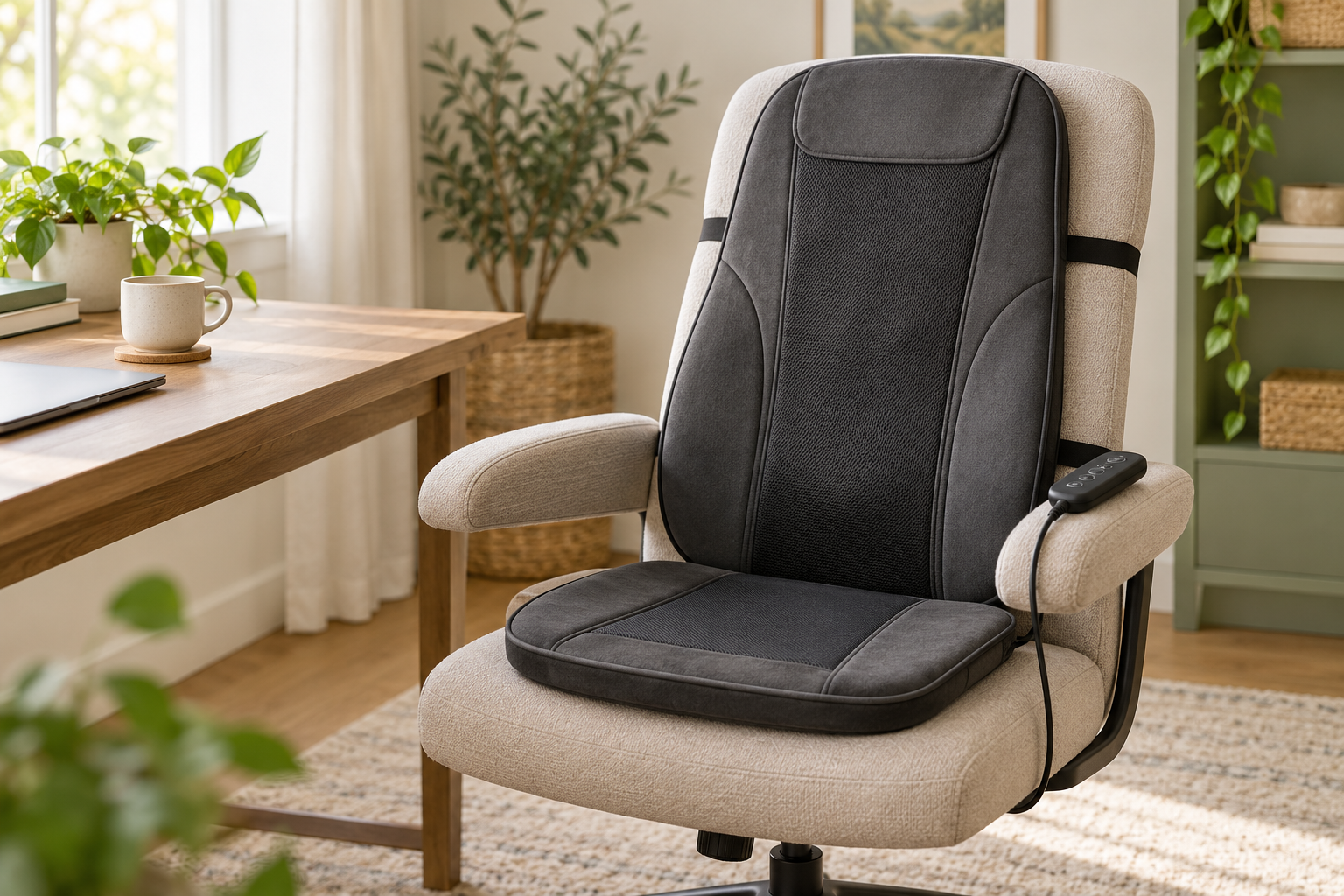
A heated massage seat cushion combines fit, power, warmth, and vibration in one chair accessory. The safest choice is the model that fits the chair, outlet, body, and manufacturer instructions.
This guide was reviewed against current official product information where a model is discussed. Specifications and packages can change, so verify the exact label or manufacturer page before acting.
Separate heat from massage
Some cushions use surface warmth plus vibration motors; others add moving shiatsu nodes. Those are different sensations, clearances, and power needs. Decide whether gentle vibration, kneading pressure, or simple warmth is the main goal. A stronger mechanism is not automatically better, especially for people with reduced sensation, circulation concerns, recent injury, or implanted devices.
Check the intended chair and power source
Confirm whether the cushion is approved for a home chair, office chair, vehicle, or more than one setting. Use only the supplied and specified adapter. COMFIER notes that current packaging and car-adapter availability can differ by model, so never assume an Amazon bundle includes the same accessories shown in an older review.
Compare current reference models
COMFIER model 2206 lists separate back and seat heat zones, vibration settings, and an automatic timer. Model 2105 emphasizes adjustable straps, memory foam, and independent heat and vibration control. Snailax currently lists several heated vibration pads and shiatsu cushions. Verify exact model numbers because similar-looking controllers can operate different products.
Measure the chair before buying
Compare cushion width, back height, seat depth, strap position, and controller-cord reach with the actual chair. A loose cushion can bunch, while a tall back panel may not fit beneath a headrest. Avoid covering chair controls or blocking ventilation. Follow the cushion maker and chair maker when the two instructions overlap.
Read the timer and heat controls
Look for controls that are easy to distinguish without twisting, plus a timer and clear indicator lights. An automatic shutoff is a backup rather than permission to sleep on the cushion. Start at the lowest comfortable level, remain awake, and stop for burning, numbness, dizziness, unusual redness, electrical odor, or a hot controller.
Avoid trapped heat and pressure
Do not fold the cushion, sit on its controller or cord, add thick blankets, or use it under another heating product. Secure it only as directed. Moving massage nodes may create pressure in one spot, so change or stop the session if the position feels sharp. Keep liquids, oxygen equipment, and damaged outlets away.
Treat health limits seriously
These products are comfort devices, not substitutes for diagnosis or treatment. People who are pregnant, have diabetes, circulation or sensation changes, implanted devices, or unexplained pain should follow professional and manufacturer guidance. Never use heat to mask a new injury, swelling, fever, infection, or worsening symptoms that need evaluation.
Choose the simplest suitable model
Pick COMFIER 2105 when a strapped home-office vibration cushion fits the need, model 2206 when separate heat zones are useful, or a current Snailax model when its exact mechanism and dimensions fit better. Confirm the official manual, model, adapters, and chair use first, then compare paid Amazon results. Product availability is unverified while Amazon API eligibility is blocked.
Quick checklist
- Identify heat, vibration, or shiatsu.
- Verify chair use and power adapter.
- Measure the chair and strap positions.
- Start with the lowest comfortable heat.
- Stay awake and check skin.
- Stop for heat, odor, or control problems.
Why these checkpoints matter
- Identify heat, vibration, or shiatsu. This defines the starting condition and prevents the rest of the process from resting on an assumption.
- Verify chair use and power adapter. This narrows the choice to evidence you can verify on the exact label, model, or scene.
- Measure the chair and strap positions. This checkpoint reduces avoidable risk before another variable is introduced.
- Start with the lowest comfortable heat. This keeps the routine compatible with the person, product, material, or equipment involved.
- Stay awake and check skin. This creates a repeatable step instead of relying on memory or marketing language.
- Stop for heat, odor, or control problems. This final review catches changes in condition, availability, or instructions before the next use.
Common questions
Can I sleep on a heated seat cushion?
No. Stay awake and attentive, and follow the exact time and placement limits in the manual.
Can I use a car adapter with a home cushion?
Only when the exact model and manufacturer specify that adapter. Similar plugs can have incompatible electrical ratings.
Does auto shutoff make long sessions safe?
It is only a backup. Session length, skin checks, placement, and health limits still matter.
Official product references
Compare current Amazon listings
COMFIER 2206 seat cushion
Confirm the exact model, package contents, seller, current price, and availability before ordering.
COMFIER 2105 seat cushion
Confirm the exact model, package contents, seller, current price, and availability before ordering.
Snailax heated vibration seat cushions
Confirm the exact model, package contents, seller, current price, and availability before ordering.
Keep the decision useful
Write down the exact model, label, starting condition, and result. Change one variable at a time and return to the official instructions when anything is unclear. A short record makes the next decision easier and keeps an isolated result from becoming a rule that does not fit a different product, person, material, or environment.
Review the information again before repeating the process. Stop when comfort, safety, condition, or the manufacturer’s instructions provide a reason to stop. A useful routine stays simple because every step answers a real question.
For the next attempt, note what improved, what remained uncertain, and what should stay unchanged. This final check reduces guesswork and helps small problems become visible before they turn into repeated mistakes.
Keep the original instructions, model information, and observations together. Before repeating the process, confirm that the product, setting, environment, and intended result are still the same.
Use the result as one observation rather than a promise. Conditions change, and the safest next step is the one supported by the current label, manual, evidence, and the limits you can verify.
Use the result as one observation rather than a promise. Conditions change, and the safest next step is the one supported by the current label, manual, evidence, and the limits you can verify.