
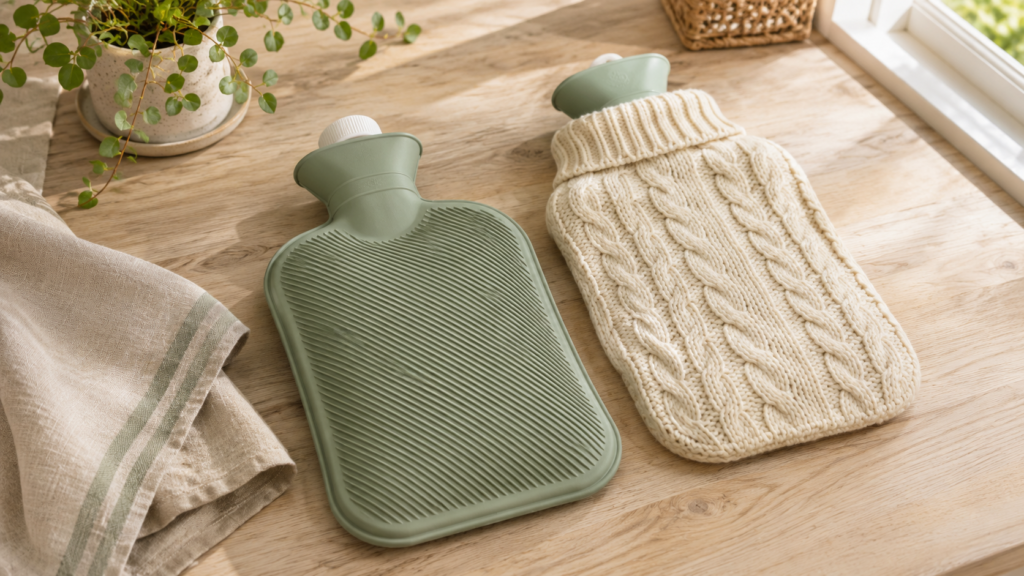
Hot-Water Bottles: How to Compare Size, Covers, and Handling
Reviewed and updated: November 3, 2026
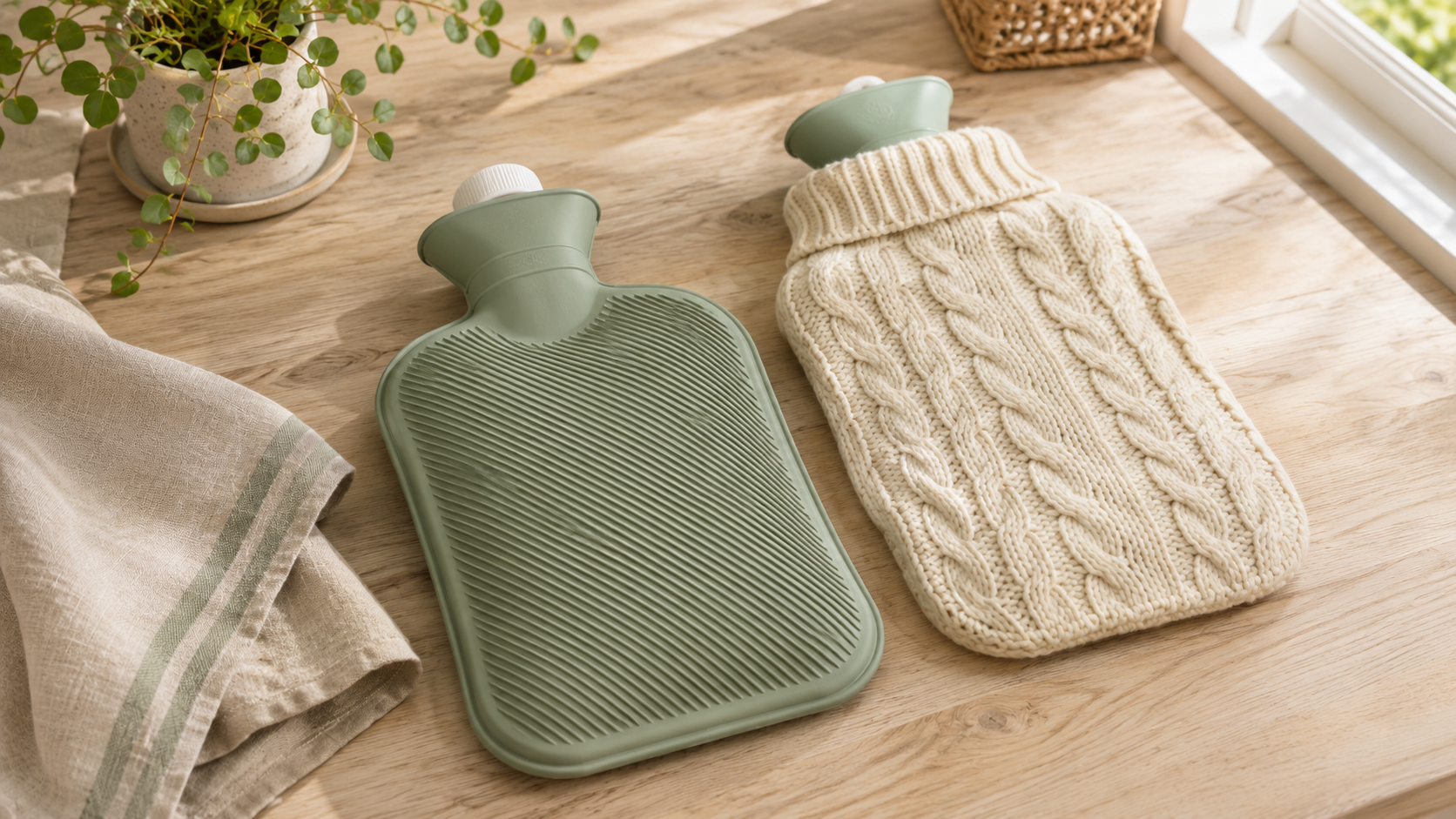
A hot-water bottle looks simple until you compare the details that affect everyday handling: the opening, stopper, cover, filled weight, and instructions. For an adult who can safely fill and remove one, a conventional bottle can provide cord-free warmth. The better choice is the design you can inspect and handle confidently, rather than the biggest bottle or the thickest-looking cover.
Two useful starting points are the Fashy thermoplastic range and the Hugo Frosch Classic 1.8-liter range. Both offer alternatives to traditional natural-rubber bottles. This guide compares buying considerations, not hands-on temperature tests, and neither material removes the risk of burns. If pouring hot water feels difficult or unsafe, choose another approach to everyday comfort.
Start with the bottle, then choose the cover
A decorative cover can hide the part that matters most. Look for a clearly identified manufacturer, readable filling instructions, a stopper designed for that bottle, and an unobstructed opening. Product photographs should let you distinguish the actual bottle from its fabric sleeve. A cover-only purchase will not provide a replacement bottle, while a bottle-only package may require a suitable cover separately.
Decide where you will use it before comparing shapes. A conventional rectangular bottle is easy to place beside you while seated, provided it cannot fall or become trapped beneath your body. A very long design needs different handling and storage. For this comparison, stay with ordinary bottles whose shape you can lift, support, inspect, and empty without twisting awkwardly.
Rubber and thermoplastic: what changes?
Natural rubber and thermoplastic describe the bottle material, not a guarantee of comfort or safety. Rubber can be unsuitable for someone with a latex allergy. Thermoplastic designs deserve a closer look when avoiding natural rubber is a priority, but check the complete product description and cover materials rather than assuming every component is suitable for a particular allergy.
Surface ribs, fabric thickness, water temperature, and room conditions all affect the experience. Neither a ribbed surface nor a plush cover proves that a bottle can stay against skin safely. Avoid choosing from unsupported promises about hours of warmth. Instead, compare instructions you can follow, access to the stopper, and how easily the cover comes off for inspection.
Capacity is not the amount you should pour
A capacity printed in liters describes the bottle; it does not mean you should fill it to the top. Follow the filling limit on the exact bottle you receive. Larger capacity also means more weight when filled to a comparable level, which matters when carrying the bottle from the sink or lifting it away from your body. Choose manageable handling before extra coverage.
Test your routine with the empty bottle first: can you hold the neck securely, see the opening, turn the stopper without strain, and remove the cover? This is a practical handling check, not proof that filling with hot water will be safe. If any step is awkward, do not compensate by bracing the bottle against your body or filling it while seated with it on your lap.
Look closely at the opening and stopper
A broad, accessible opening may make positioning easier, but you still need a stable setup over a sink and careful pouring. Never use boiling water. Follow the maker’s directions for water temperature, filling level, removing excess air, and closing the stopper. Do not borrow a filling method from a different bottle simply because its shape looks similar.
Inspect the stopper and sealing area before each use. Stop if threads are damaged, the stopper no longer fits normally, or the bottle leaks. A replacement cap that appears to fit is not automatically compatible. Do not repair the seal with tape, glue, or an improvised washer. Replace an unsafe bottle rather than trying to make a damaged closure work.
Choose a cover you will actually remove
A removable cover makes the bottle easier to inspect and the fabric easier to clean. Check the care label separately from the bottle instructions. Machine-washable fabric does not make the bottle machine washable. A tight decorative sleeve may look tidy but become frustrating if you avoid removing it to check seams and the neck.
Choose a cover that fits the bottle without stretching it into an unusual shape or blocking the stopper. Keep the protective fabric between the bottle and skin during use, while remembering that covered heat can still burn. If you need guidance on putting the bottle away between sessions, our hot-water bottle packing and storage guide explains the practical checks.
Plan for inspection and replacement
Look for cracks, fading, brittleness, leakage, damaged seams, or an altered sealing surface. A soft cover can conceal these changes, so inspect the uncovered bottle. Follow the manufacturer’s replacement instructions and local consumer-safety guidance. A manufacture-date symbol is useful information, but an apparently recent date cannot override visible damage or uncertain storage history.
Australian product-safety guidance recommends replacing hot-water bottles annually and removing them from the bed before getting in. Its hot-water bottle safety guide also explains the burn risks. A bottle stored unused for years should not be treated as new solely because the cover still looks clean.
When another comfort option makes more sense
Hot-water bottles require pouring, closing, carrying, and checking a container of hot liquid. Avoid them if reduced sensation or limited movement prevents noticing excessive heat or removing the bottle promptly. People with diabetes, circulation problems, or other conditions affecting sensation should obtain individual clinical advice. Keep hot-water bottles away from babies and young children.
Never sit, lean, or lie on the bottle, and remove it before sleeping. If your goal is a different form of warmth, start with the heating-pad guides to compare formats. An electrical pad brings its own precautions; switching formats does not eliminate the need to read instructions and monitor skin comfort.
Which should you choose?
Compare the Fashy range if cover choice and a conventional thermoplastic bottle are your starting priorities. Compare Hugo Frosch Classic if its 1.8-liter format and holding feature suit your handling needs. In either case, choose a clearly identified bottle with readable instructions and a removable, correctly fitting cover. Skip any design you cannot safely fill, inspect, and move.
Two thermoplastic options to compare
These numbered recommendations focus on different shopping questions. Fashy offers a broader starting point for comparing conventional bottle and cover combinations. Hugo Frosch Classic provides a clearly identified 1.8-liter family to compare with larger designs. Keep the named range and bottle capacity consistent when reviewing search results, because similar-looking covers can surround different bottles.
01
Conventional bottle and cover choices
Fashy Thermoplastic Hot Water Bottle
Fashy identifies its hot-water bottle range as thermoplastic. Compare the bottle shape and cover combination against your intended routine, and read the exact filling directions. Choose this range as a starting point if you want to compare conventional designs without natural rubber. Check the bottle material and package contents independently of the cover photograph.
View current Amazon search results for Fashy Thermoplastic Hot Water Bottle (paid link)Compare the named bottle and cover combination.
02
A defined 1.8-liter format
Hugo Frosch Classic 1.8 Liter Hot Water Bottle
Hugo Frosch describes its Classic range as thermoplastic with a 1.8-liter capacity and an XL holding strap. That holding feature is worth assessing if neck grip is a concern, although it cannot make unsafe pouring safe. Compare the exact cover and closure arrangement, and avoid confusing the Classic bottle with the separate Eco range.
View current Amazon search results for Hugo Frosch Classic 1.8 Liter Hot Water Bottle (paid link)Compare the named bottle and cover combination.