
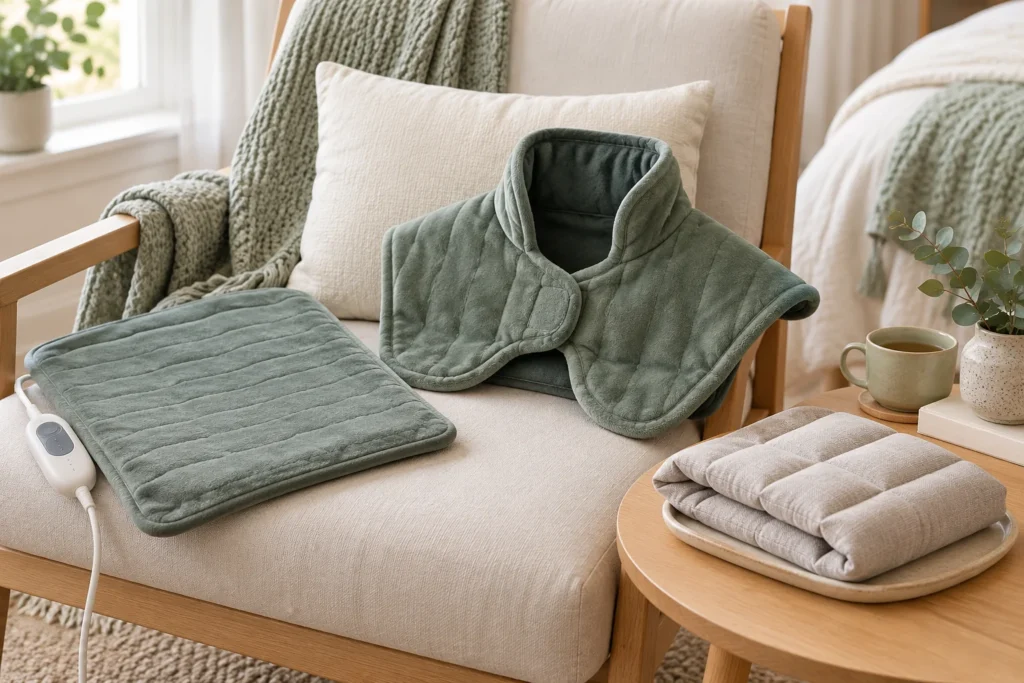
Heating Pad vs. Heated Wrap: Which Shape Fits Your Routine?
Reviewed and updated: October 17, 2026
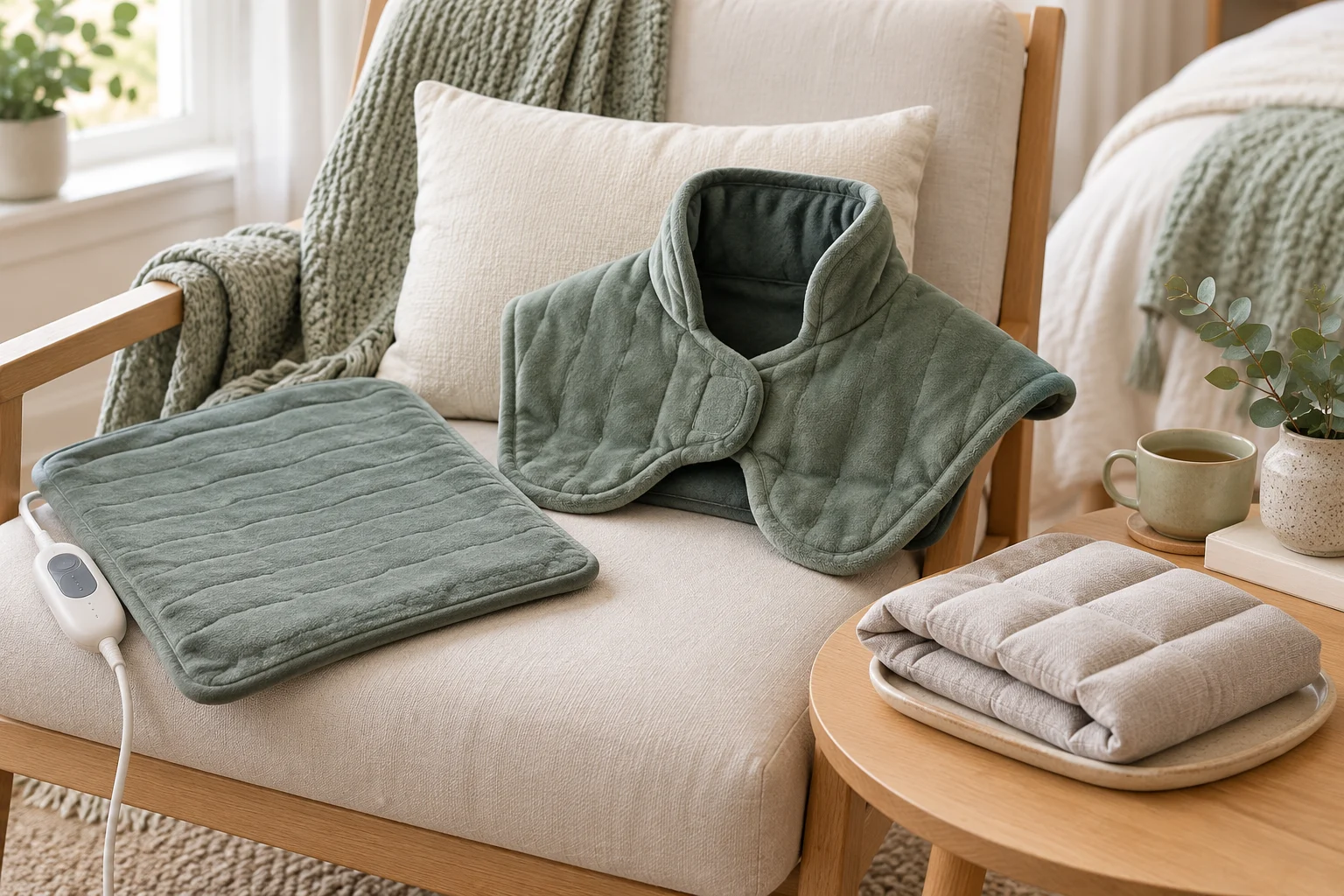
A flat pad, contoured neck wrap, and weighted moist-heat pad differ most in coverage, positioning, controls, shutoff, and care. Choose the shape around safe use rather than maximum heat.
Start with the body area
A flat rectangular pad is flexible across the back, abdomen, or legs, while a contoured wrap is designed to stay around a specific area such as the neck and shoulders. A weighted pad uses its construction to maintain contact but can feel too heavy for some users. Measure the intended area and think about sitting position, cord direction, and whether you need hands-free placement. Never fold an electric pad sharply or trap it beneath your body unless the instructions explicitly allow that use.
Compare current shapes
Sunbeam currently lists the Neck Renue Heat Wrap as a 22-by-19-inch contoured model with lightly weighted edges, a magnetic closure, four settings, and a two-hour shutoff. Pure Enrichment lists the PureRelief XL as a king-size rectangular pad. Thermophore lists the MaxHEAT 155 as a 14-by-27-inch weighted moist-heat model with a shorter automatic shutoff. These designs are not interchangeable. Verify the exact model because size, controller, warning, and care directions can differ within one brand.
Treat heat level as a safety setting
More heat is not inherently better. The safe setting depends on the device, body area, session length, sensation, circulation, medications, and clinician guidance. Begin low and check the skin frequently. Stop for burning, numbness, unusual redness, dizziness, or increased pain. People with reduced sensation, diabetes, poor circulation, pregnancy, implanted devices, or other medical concerns should follow professional and manufacturer guidance. Do not use heat to push through unexplained or acute symptoms.
Look closely at automatic shutoff
Automatic shutoff is a backup, not permission to sleep with a heating pad. Compare the duration with the way you plan to use the product, and confirm whether the controller remembers the last setting. A short shutoff can be useful for intentional sessions; a longer shutoff still requires attention. Keep the controller visible, do not place it beneath blankets, and unplug the product after use. Replace any unit that turns on unpredictably or has a damaged switch, connector, or cord.
Check fit and closures
A neck wrap should rest without pulling on the throat, pinching skin, or forcing the shoulders forward. Sunbeam’s product page warns that its magnetic closure may be unsuitable for people with certain implanted devices. Read every warning before purchase. A weighted pad should lie on top of the body rather than beneath it when the manual says so. Flat pads need support that prevents bunching. Try the shape without power first so you can identify pressure points and cord tension safely.
Understand moist-heat claims
Some pads allow a light spray, some draw moisture from ambient air through a cover, and others are dry-heat only. Follow the exact method for the exact model. Never soak a pad, improvise a wet towel around electrical connections, or assume a washable cover makes the heating element washable. Moisture can change heat transfer and skin sensation, so start conservatively. If the manufacturer’s page and the included manual conflict, stop and contact the manufacturer before using the moist-heat feature.
Compare cleaning and storage
Sunbeam says the controller must be disconnected before washing its wrap and provides specific cool, gentle care instructions. PureRelief and Thermophore have their own component-level directions. Save the manual and photograph the label. Let every washable part dry completely before reconnection. Store the pad flat or loosely rolled as directed, with no sharp folds or heavy objects on top. Inspect the cord, controller, fabric, seams, and connector before every session and retire damaged electrical heat products.
Choose around the routine
Select a contoured wrap when stable neck-and-shoulder positioning matters, a large flat pad when coverage must move between areas, or a weighted moist-heat pad when its contact style and short session fit your plan. Verify official specifications first, then compare current retail packages through the affiliate searches. Do not use price, review count, or the word professional as a substitute for size, controls, shutoff, warnings, and care. The safest useful product is the one whose instructions you can follow consistently.
Quick checklist
- Match the shape to one body area.
- Confirm model-specific warnings and shutoff.
- Begin on a low setting.
- Keep the controller and cord visible.
- Never sleep on or with an active pad.
- Inspect and store the product as directed.
Common questions
Is a heated wrap safer than a flat pad?
Shape alone does not determine safety. Correct fit, low starting heat, intact equipment, session timing, sensation, and following the model’s instructions all matter.
Can I use a heating pad every day?
Ask a clinician when symptoms persist or daily heat becomes necessary. Repeated use can mask a problem, and individual risks differ.
Does moist heat work better?
People may prefer the feel, but the product must explicitly support moist heat. Use the approved method and avoid unsupported medical claims.
Compare current Amazon listings
01
Current option to compare
Sunbeam Neck Renue heat wrap
View on Amazon (paid link)
02
Current option to compare
PureRelief XL heating pad
View on Amazon (paid link)
03
Current option to compare
Thermophore MaxHEAT 155
View on Amazon (paid link)