
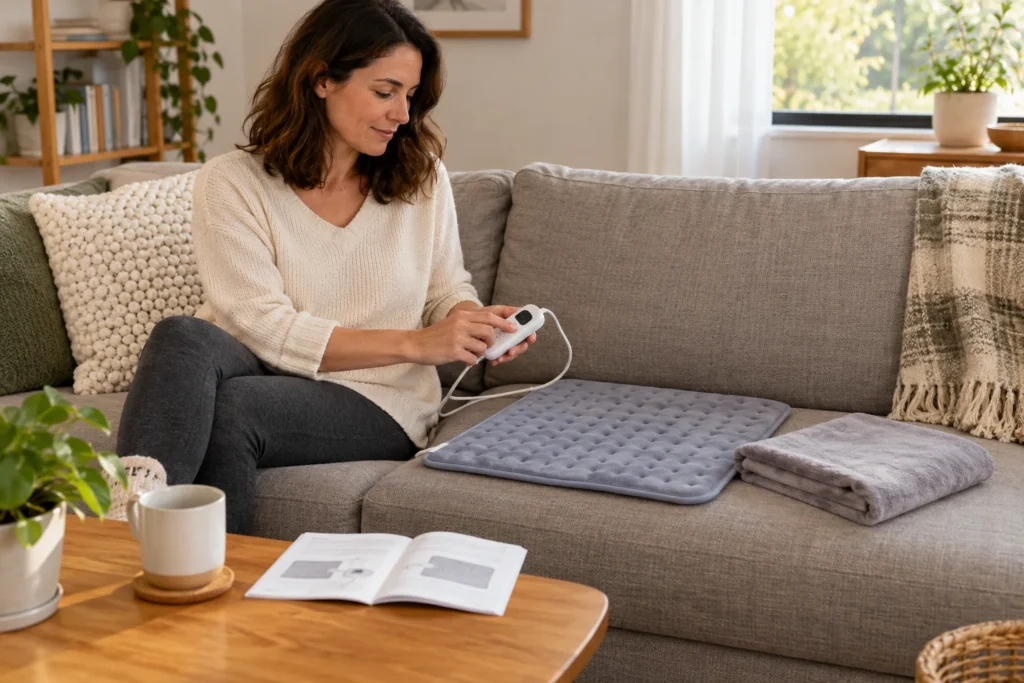
Heating Pads for Home Therapy: How to Choose and Use One Safely
Reviewed and updated: November 16, 2026
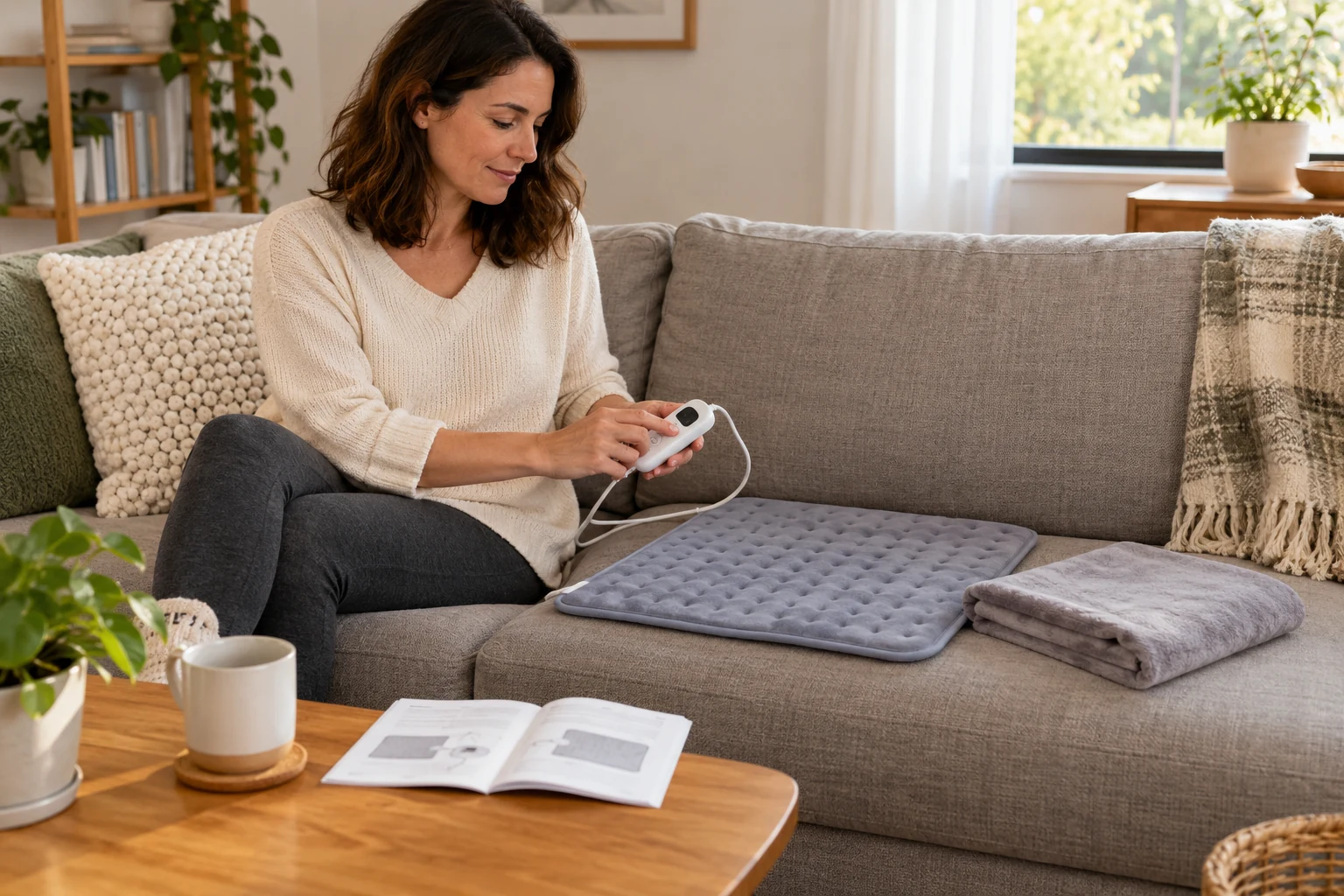
A comfortable heat break starts with a pad that fits the place you want to warm. For familiar stiffness at home, we’d favour a simple design with adjustable warmth, controls you can reach and clear care instructions. A larger pad is useful only when you can keep it spread out properly. The aim is temporary comfort that helps you return to your day, without expecting the heating pad to diagnose or cure the reason you feel sore.
That makes choosing one less complicated than comparing the longest list of features. Think about where you will sit, which area needs coverage and whether you can easily remove the pad yourself. Once those basics work, the fabric, controller and cleaning routine become meaningful differences. They matter more than finding the highest temperature or leaving the heat on for the longest possible time.
Match the shape to your comfortable position
A flat rectangular pad gives you a straightforward surface to position over a particular area. Measure the space you want covered and consider how the pad will rest while you are seated. Extra fabric that needs to be folded to fit is not an advantage. Keep a standard pad on top of the area as its instructions direct, rather than sitting or leaning against it.
A shaped wrap may be easier to arrange around your shoulders or middle, while a wider rectangle offers more coverage. The right choice depends on placement, not on a claim that one shape provides stronger therapy. Our guide to larger heating pads explores that coverage decision. A product should fit the position you can use comfortably; you should not need to twist or trap the pad to hold it there.
The supplied cover belongs in that decision too. A soft finish can make a short seated break more inviting, but softness does not remove the need for skin protection. Use the intended cover and follow the instructions about a clothing layer or other barrier. Do not improvise a thick enclosing cover that could trap heat.
Look for controls you will actually use
Adjustable warmth is useful because comfortable heat can change as you settle in. Start with the lowest useful setting and keep the control within easy reach. An easy-to-read display and a clear off button can matter more in daily use than extra settings you rarely need. You should be able to adjust or stop the heat without rearranging everything around your seat.
Automatic shutoff is a worthwhile feature, but its timer is not a recommended treatment length or a guarantee against burns. Different models have different modes, including timers you can change. Read your own instructions and turn the pad off when your break is finished. Remain awake throughout; a standard heating pad is not a sleep aid.
01
For focused home comfort
Heating Pads
We favour a pad that rests flat over your chosen area, with gentle adjustable warmth and controls within easy reach.
Find in Amazon (paid link)
Decide whether warmth fits the symptom
Heat can sometimes ease familiar stiffness or muscle tightness for a while. For example, the NHS advice on back pain (paid link) includes a covered heat pack for joint stiffness or muscle spasms. That is a comfort option alongside appropriate care, rather than a reason to ignore pain that is new or getting worse.
A hot, swollen or red area, an open wound, suspected infection or active bleeding calls for a different decision. Do not simply cover it with a heating pad. Reduced sensation or poor circulation also makes home heat risky because you may not notice a problem soon enough. The hospital guidance on heat and ice stresses normal sensation and circulation, skin protection and staying awake.
Individual product restrictions can be stricter than general advice. Some manufacturers prohibit use by people with diabetes or by children, for example. Follow those restrictions. Ask a clinician before choosing home heat when pregnancy, fragile skin, a medical condition or medicines affecting alertness complicate the decision. Someone unable to sense heat or move the pad independently needs individual advice, not an unattended heating routine.
Make the setup easy to manage
Your seat should let you keep the fabric open and the controller uncovered. Check the pad, cover, connector and cable before use. Fraying, scorching, damaged connections or an unusual hot spot are reasons to stop using it and contact the manufacturer. Do not tape over a damaged cable or substitute a controller that merely looks similar.
Route the cord away from feet and furniture mechanisms, with enough slack to avoid pulling the connector. Keep drinks away from electrical parts. Moist heat is only appropriate when your specific pad permits it and you follow its dampening instructions; a washable fabric surface does not mean the powered product can be soaked. Avoid combining the pad with another heat source or pain-relief ointment unless the relevant instructions permit that combination.
Judge the break by comfort afterwards
Settle somewhere you can pay attention to how your skin feels, rather than beginning a heat session just before you expect to doze. Check your skin regularly. Comfortable warmth should not become burning, painful, prickling or numbing. Remove the pad for lasting redness, altered sensation, dizziness, swelling or worsening discomfort. Stop rather than trying a higher setting.
A useful question afterwards is whether ordinary movement feels easier, such as standing from the chair or changing position. You do not need an elaborate log, although a brief note about the setting, time and skin response can help when discussing recurring symptoms with a clinician. Increasing the intensity or repeating sessions more often is not a substitute for finding out why you keep needing relief.
Cleaning is part of choosing a pad
Compare what can actually be washed: some designs have a removable cover, while others allow washing the pad after disconnecting its controller. Those are different care routines. Follow your model’s label for washing, drying and reconnection, and keep electrical controls dry. Our cleaning and maintenance guide covers the practical distinctions.
After use, unplug the pad and let it cool before putting it away. Avoid sharp creases, tightly wound cords and heavy things stacked on the heated fabric. A suitable storage space protects it better than squeezing everything into an overfilled drawer. For recurring menstrual discomfort, the period-cramp guide offers a more focused discussion of fit and safe use.
Know when the pad should wait
Seek urgent medical advice for sudden severe pain, rapidly worsening symptoms, fever or feeling unwell with back pain. Back pain with new weakness or numbness in both legs, loss of feeling around the genitals, bladder or bowel changes, chest pain or a serious accident needs emergency assessment. Severe unexplained abdominal pain also deserves prompt care. Do not delay help to try heat first.
For familiar stiffness when home heat is appropriate, choose the pad you can position, control and care for comfortably. Keep the warmth gentle, the session attentive and the expectations realistic. A well-chosen pad earns its place by making a short comfort break easier to manage, alongside the advice and everyday activity that suit your situation.