

Heat or Cold for Back Pain: A Practical Safety Guide
Reviewed and updated: October 2, 2026
Quick take: Cold is often the more comfortable choice soon after a minor strain or when swelling is present. Heat can feel better for stiffness, guarding, or a recurring ache. Neither fixes the cause of back pain, and the safest choice depends on your symptoms and health.
Heat or cold: the practical difference
Cold reduces skin temperature and can temporarily dull pain. Heat raises surface temperature and may make tight muscles feel easier to move. Both are comfort measures, not competing cures. MedlinePlus lists hot or cold packs among possible treatments for back pain, along with movement, medicines, and other care chosen for the cause.
The “right” option is usually the one that provides brief relief without damaging skin or delaying needed evaluation. If a cold pack makes muscles clamp down, switch approaches. If heat makes throbbing or swelling feel worse, stop. You do not need to tolerate an unpleasant treatment because of a rigid rule.
When cold may make sense
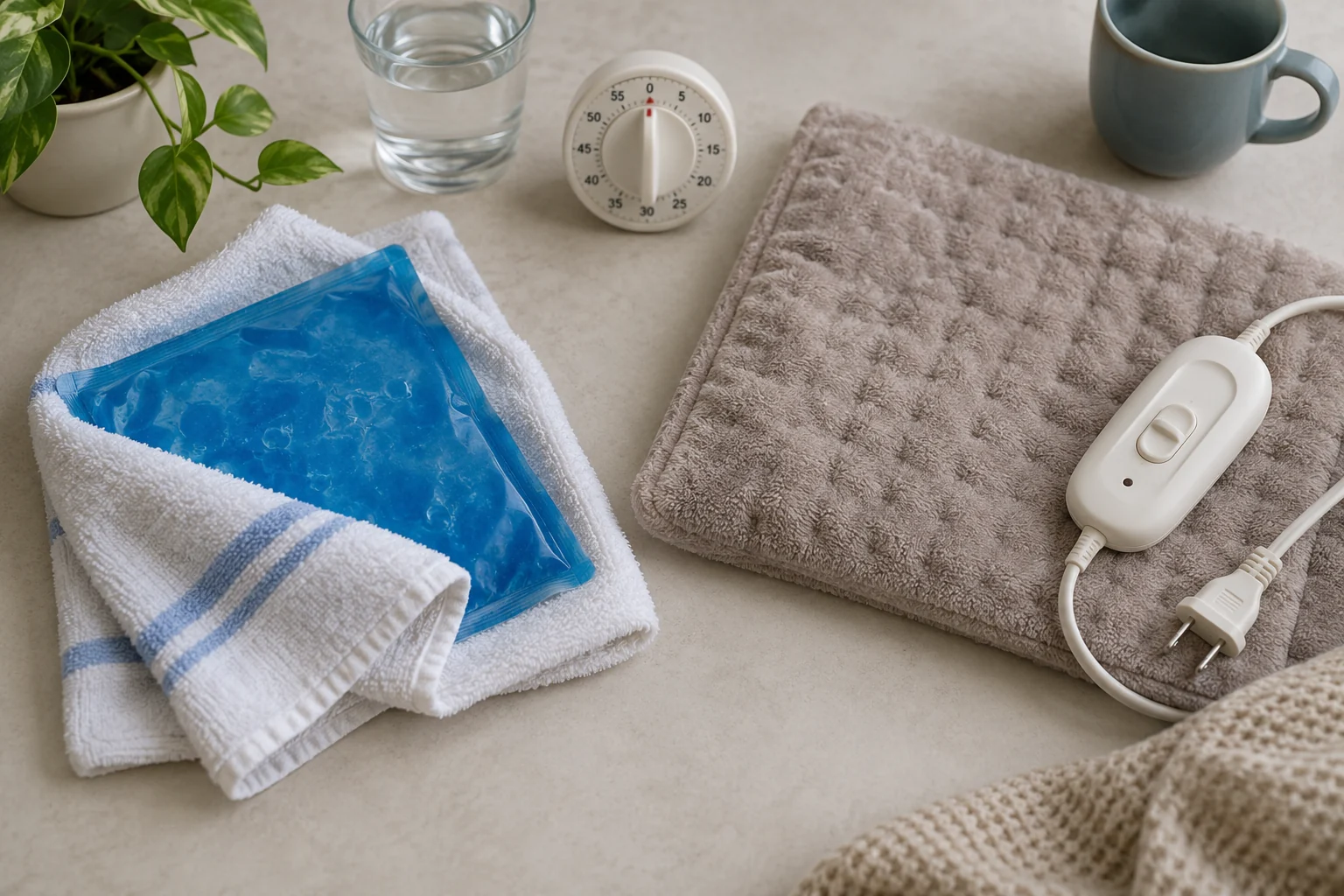
Cold is commonly used during the first day or two after a minor overuse episode or strain, especially if the area feels warm or swollen. Wrap a reusable cold pack or bag of ice in a thin towel. Apply it for about 10 to 20 minutes, then remove it and allow the skin to return to normal temperature before another session.
Never place ice directly on skin, fall asleep on a cold pack, or use it over an area with poor sensation or circulation. Check the skin every few minutes. Marked paleness, mottling, numbness that continues, burning pain, or blistering means stop. Cold may be a poor fit for Raynaud phenomenon, cold urticaria, significant vascular disease, or a condition that reduces sensation.
When heat may feel better
Gentle heat often suits stiffness, muscle guarding, or an ache that improves as you start moving. A warm shower, warm compress, or heating pad on a low setting may help before stretching or ordinary activity. Keep sessions brief—often about 15 to 20 minutes—and follow the product manual if it gives a shorter limit.
Do not sleep with an electric heating pad, lie on top of it, fold it sharply, or trap it under a tight wrap. Those choices concentrate heat and make burns more likely. Avoid heat over broken, infected, or acutely inflamed skin. Extra caution is necessary with diabetes, neuropathy, circulation problems, sedating medicines, or any condition that makes temperature hard to feel.
A simple decision guide
| Situation | Option to consider | Why |
|---|---|---|
| Recent minor strain with warmth or swelling | Cold | May dull pain and feel calming |
| Stiffness that improves with movement | Heat | May ease guarding before activity |
| Neither feels comfortable | Neither | Comfort treatment is optional |
| Numbness or poor circulation | Ask a clinician | Skin injury may go unnoticed |
| Severe pain or neurologic symptoms | Medical evaluation | Home temperature therapy is not enough |
Can you alternate heat and cold?
Some people like alternating them, but more steps do not guarantee better relief. If you try both, use separate brief sessions and let the skin return toward normal between them. Do not move directly from extreme cold to high heat. Record which approach helps you move more comfortably and which makes symptoms worse.
Alternating can be confusing when the skin is already numb. Use one approach at a time, stay awake, and inspect the area. A timer is more reliable than guessing. Stop once the comfort benefit fades rather than extending the session indefinitely.
Keep moving within reason
Temperature therapy works best as a small part of a broader plan. MedlinePlus notes that staying in bed for more than a day or two can make back pain worse. For many uncomplicated episodes, gentle walking and ordinary activity within tolerance are preferable to prolonged bed rest. Avoid heavy lifting or movements that sharply increase pain.
A clinician or physical therapist can help when pain keeps returning. They may assess strength, mobility, work setup, sleep position, lifting habits, and whether the pain pattern suggests a problem that needs different care. Heat and cold cannot correct a fracture, infection, compressed nerve, or internal-organ cause of pain.
When back pain needs medical attention
Call a health professional when pain is severe, follows an injury, or is not improving after a few days. Seek urgent care for new leg weakness, spreading numbness, numbness around the groin or saddle area, loss of bladder or bowel control, fever with back pain, unexplained weight loss, chest or abdominal symptoms, or pain after a major fall or crash.
People with cancer, osteoporosis, immune suppression, long-term steroid use, recent infection, or a history of injection drug use should have a lower threshold for evaluation. New back pain during pregnancy also deserves individualized advice. These signs do not identify one diagnosis, but they make self-care alone less appropriate.
Safer-use checklist
- Use a towel or clothing barrier unless the product instructions say otherwise.
- Start with mild temperature and a short session.
- Stay awake and keep the device or pack visible.
- Inspect skin before, during, and after treatment.
- Do not use damaged electrical equipment or leaking gel packs.
- Stop for burning, persistent numbness, unusual discoloration, dizziness, or worsening pain.
If both heat and cold help only briefly while pain steadily worsens, the pattern matters more than the temporary relief. Arrange an evaluation rather than increasing the temperature or session length.
What relief can tell you—and what it cannot
Feeling better with heat does not prove the pain is “muscular,” and relief with cold does not prove inflammation is the whole problem. Many pain conditions respond temporarily to changes in sensation. Use the response to make the next hour more comfortable, not to diagnose the cause.
Track duration, triggers, leg symptoms, sleep disruption, and which movements help. A short written record gives a clinician more useful information than saying only that heat worked. It can also reveal whether a treatment is helping you resume gentle activity or merely encouraging repeated sessions while function declines.
What about topical creams?
Do not place a heating pad over menthol, capsaicin, methyl salicylate, or another medicated rub unless the product directions and a clinician specifically allow it. Added heat can increase irritation or burns. Wash hands after applying a topical product and keep it away from eyes and broken skin.
Whichever option you choose, judge it by function as well as comfort. Brief relief that helps you walk, change position, or begin a clinician-approved exercise is more useful than staying still for repeated sessions. Stop if symptoms spread, strength changes, or the treatment makes ordinary movement harder afterward.