
Best Heating Pads for Menstrual Cramps: 3 Current Options and Safer Heat Use
Reviewed and updated: September 29, 2026
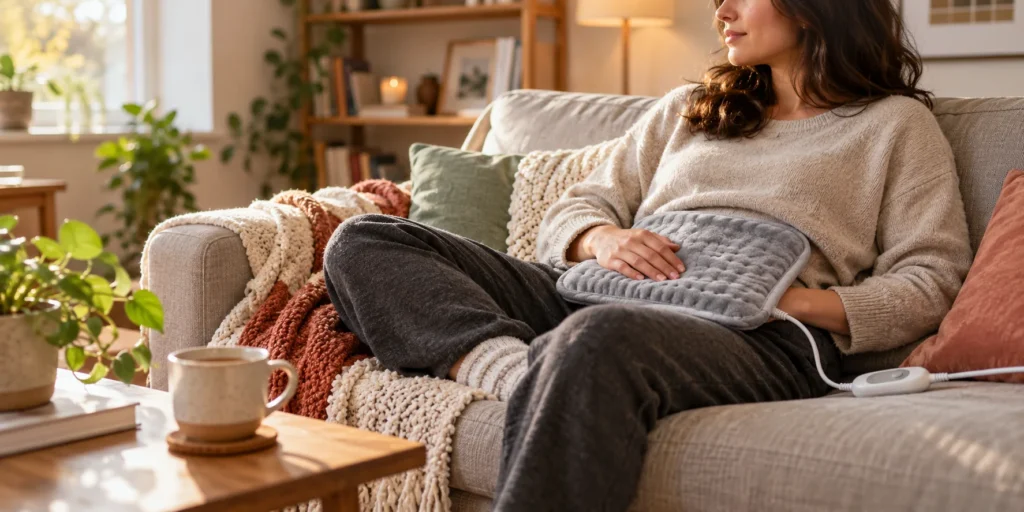
A heating pad can provide comforting warmth during menstrual cramps, and major health sources including ACOG, the NHS, and MedlinePlus list heat as a self-care option. Product choice still matters. The best format for resting on a sofa may be too bulky for travel, while a simple pad may be easier to position over the lower abdomen than a heavy design.
Use gentle heat and stay awake
Place the pad over clothing or use it exactly as the current instructions direct, start at a comfortable low setting, and check your skin. MedlinePlus says never fall asleep with a heating pad. Stop if the heat becomes uncomfortable. If period pain is severe, suddenly worse, lasts longer than usual, or is not helped by usual measures, contact a health professional.
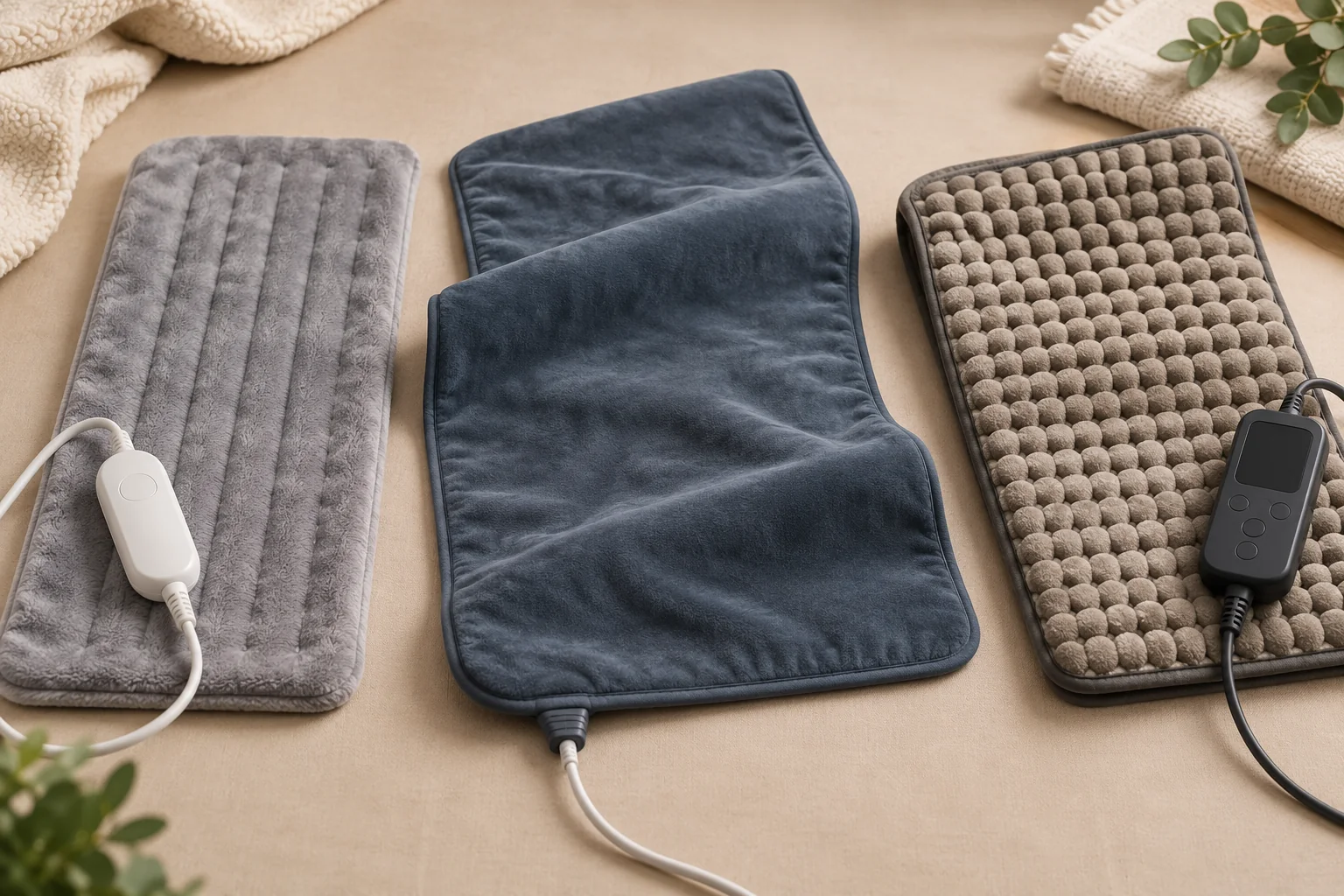
Three current heating-pad formats
01
A soft, flexible pad with six heat settings
Pure Enrichment PureRelief XL Heating Pad, 12 x 24 in
PureRelief XL is the straightforward everyday option. Its 12-by-24-inch format can cover the lower abdomen without the weight and bulk of a stone pad. Pure Enrichment lists six heat settings, a two-hour automatic shutoff, a machine-washable fabric, a nine-foot cord, and an option for moist heat. The broad setting range can help you begin conservatively, but the auto-off should be treated as a backup feature rather than a signal that two hours is the right session for everyone.
Why consider it
- The exact Amazon listing is the 12-by-24-inch PureRelief XL in charcoal gray.
- Manufacturer specifications list six heat settings and a two-hour automatic shutoff.
- The pad supports dry or moist heat and has a nine-foot cord.
Things to weigh up
- It is a conventional flat pad and does not fasten around the body.
- Follow the current cleaning and moist-heat directions; do not assume every electrical component is washable.
View current Amazon search results for Pure Enrichment PureRelief XL Heating Pad, 12 x 24 in (paid link)Check the current listing, options and price before you buy.
02
A removable washable cover and simple four-setting control
Vive Moist Heating Pad, Large 12 x 24 in
The Vive Large takes a different cleaning approach: the maker describes a removable microplush cover that can be machine washed and hung to dry, while the pad itself should not be submerged. It offers four settings, a two-hour automatic shutoff, an included moisture sheet, and a cord just under nine feet. This is a sensible comparison for readers who prefer a separate cover, but the extra layer and moisture sheet add setup steps that the PureRelief design may not require.
Why consider it
- The linked Amazon page identifies the large 12-by-24-inch Vive moist heating pad.
- The maker lists warm, low, medium, and high settings with two-hour auto-off.
- The removable microplush cover is machine washable; the pad itself should not be submerged.
Things to weigh up
- Vive says not to sit or lie on the pad; it should rest on top of the intended area.
- The included moisture sheet must be used only as the supplied instructions describe.
View current Amazon search results for Vive Moist Heating Pad, Large 12 x 24 in (paid link)Check the current listing, options and price before you buy.
03
A large, heavier format with precise time and temperature controls
UTK Far Infrared Jade Heating Pad, 21 x 31 in
The UTK is the specialist format in this comparison. The current 21-by-31-inch product uses a large array of jade stones and a digital controller with adjustable temperature and time. Its published weight is about 4.8 pounds, so it will feel very different from a lightweight microplush pad. That weight and size may be welcome when resting in one place, but they reduce portability and make this a more involved first purchase. The brand’s infrared and circulation marketing is not used here as proof of better cramp relief.
Why consider it
- The exact Amazon destination is the 21-by-31-inch pure-jade UTK pad.
- The manufacturer lists temperature and time adjustment with a four-hour auto shutoff.
- Published specifications describe a large stone-filled pad weighing about 4.8 pounds.
Things to weigh up
- Heavier, larger, and likely less portable than the two microplush options.
- Do not assume infrared or jade construction provides superior menstrual-pain relief; this guide found no head-to-head evidence.
View current Amazon search results for UTK Far Infrared Jade Heating Pad, 21 x 31 in (paid link)Check the current listing, options and price before you buy.
What health sources actually say about heat
ACOG says placing a heating pad or hot-water bottle on the lower abdomen can be soothing during painful periods. The NHS and MedlinePlus also include heat among self-care measures. That supports heat as a comfort option; it does not establish that a more expensive pad, a higher setting, or a particular heating technology works better.
Use warmth carefully. Follow the manual that comes with your product, keep the control within reach, and remain awake. MedlinePlus specifically warns against falling asleep with a heating pad. Avoid damaged cords or folded, crushed, or covered pads when the manufacturer prohibits those uses. An automatic shutoff reduces one risk but does not replace attention.
Choose size and controls around your routine
For the lower abdomen, both 12-by-24-inch pads provide broad coverage without the UTK’s additional size and weight. PureRelief offers more heat steps; Vive separates the washable cover from the pad and supplies a moisture sheet. The UTK offers more precise controller adjustments and a much larger surface, but it takes up more space and may be cumbersome to move.
Do not choose by maximum heat. A comfortable lower setting and easy controls matter more than a high advertised temperature. Decide where you will sit, where the cord will run, and whether you can reposition or remove the pad promptly. If you plan to travel, check packed weight and electrical requirements before favoring a larger design.
Know when a product guide is not enough
Period pain that disrupts daily activities, becomes substantially worse, begins after years of milder cycles, or comes with other concerning symptoms deserves medical attention. ACOG notes that painful periods can sometimes have an underlying cause, and the NHS advises seeking help when pain is severe, worse than usual, or not helped by painkillers.
This article helps compare household heating-pad features. It does not diagnose the cause of cramps, prescribe a temperature, or replace the supplied safety instructions. If sensation is reduced or you have a condition that changes heat safety, ask a clinician how to use heat before applying it.
Verify the listing before ordering
The previous five-product article included old links and broad relief claims. This refresh narrows the shortlist to current, identifiable models and separates documented features from conclusions that would require comparative testing.