
Heat for Menstrual Cramps: Benefits, Limits, and Safety

Reviewed and updated: October 2, 2026
The direct answer
Primary dysmenorrhea is cramping that occurs with menstruation without another identified pelvic condition. Heat is a non-drug option with supportive trial evidence, including comparisons with no treatment and common pain medicines. It may be used alone or alongside a clinician-approved plan, but response varies.
Heat is best judged by what it helps you do safely. Temporary comfort that supports walking, changing position, or following a clinician-approved plan is meaningful. Needing progressively higher heat or longer sessions is a reason to reassess rather than escalate.
How warmth may help
Menstrual cramps involve uterine muscle activity and pain pathways influenced by prostaglandins. Surface heat may relax surrounding muscles and modify sensory signals. The precise contribution of circulation, muscle relaxation, and pain modulation is still being studied, so simple explanations about “removing toxins” should be avoided.
Pain can have several contributors at once. A change in sensation does not identify which tissue is involved, and a comfortable response does not rule out a condition that needs treatment. Keep claims proportional to the evidence.
When it may be a reasonable option
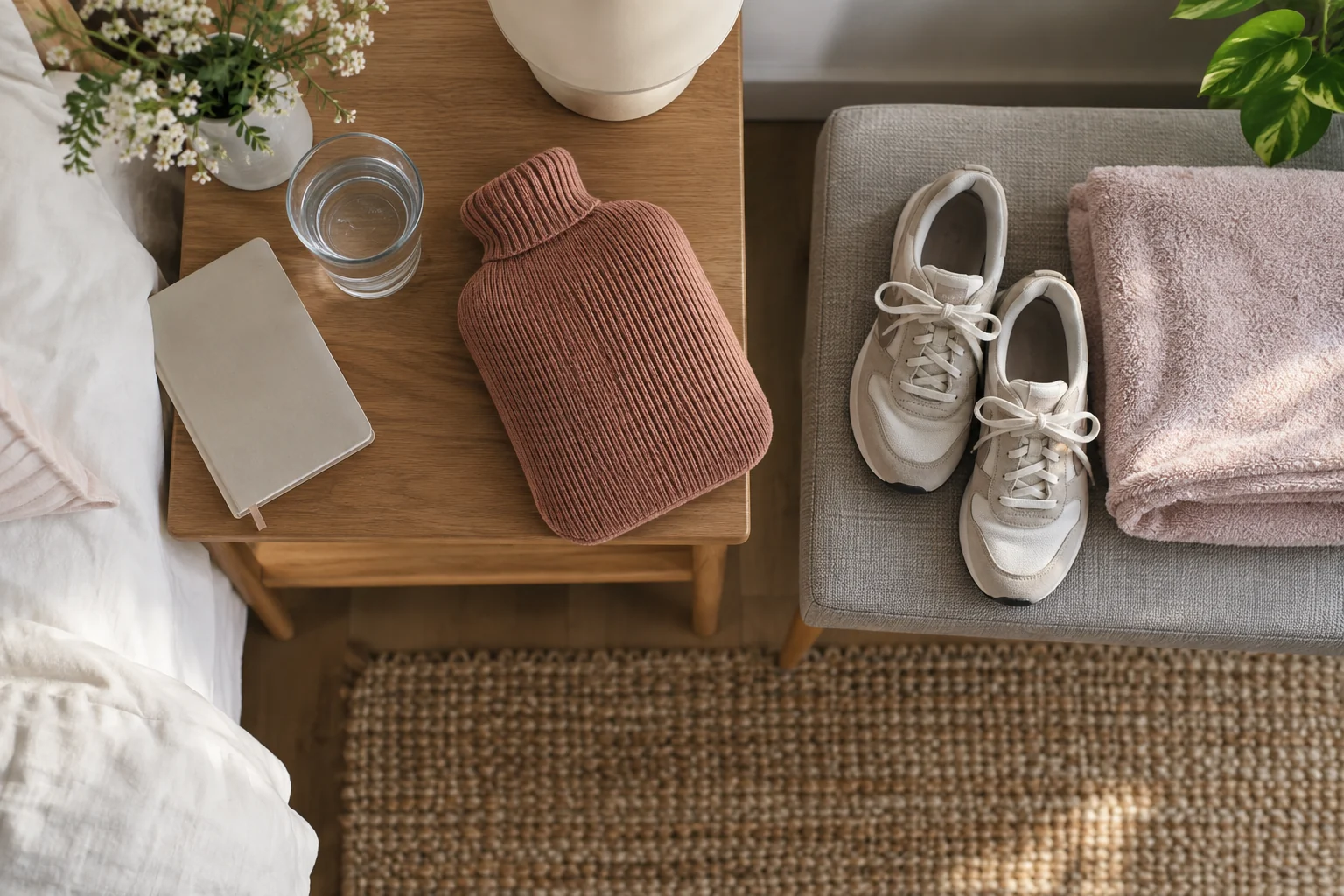
Apply a purpose-made wrap, warm bottle, or pad over clothing or a protective layer and follow its time limit. Pair comfort care with hydration, sleep, and gentle activity if those help. Track timing, severity, bleeding, and associated symptoms so changes are easier to discuss with a clinician.
Before starting, note the skin condition, current symptoms, medicines, and whether temperature sensation is normal. Recheck after a few minutes. A pad should be easy to remove immediately and should never be used as a way to push through worsening symptoms.
Limits and situations that need caution
Heat should not be used to dismiss severe pelvic pain, possible pregnancy complications, fever, fainting, or unusually heavy bleeding. A condition such as endometriosis, fibroids, infection, or another cause may need evaluation. Do not sleep with an electric pad.
Children, older adults with fragile skin, and anyone who is ill, sedated, or unable to communicate discomfort need particular caution. Do not assume that another person’s temperature setting is safe for you.
A safer-use checklist
- Read and follow the device manual because heat level, session limit, and washable parts vary. This creates a consistent starting point and reduces avoidable irritation.
- Place a cloth layer or clothing between a hot surface and skin unless the product specifically directs otherwise. Use a light touch and stop if the skin or area becomes less comfortable.
- Use the lowest comfortable setting, remain awake, and set a timer rather than relying on sensation alone. The aim is a repeatable routine, not the most aggressive result in one session.
- Keep electric pads flat, dry, and above the body; never fold sharply, sit on, or sleep on one. Pause to inspect the result in ordinary light before making another change.
- Inspect the skin and stop for burning, numbness, unusual pain, swelling, blotchy color, or blistering. Clean, dry, and store tools or devices according to their instructions when finished.
Common mistakes
Heat should feel comfortably warm, never like a test of endurance. Higher settings and longer sessions do not turn temporary comfort into faster healing. Trapping a pad under the body or a tight wrap concentrates temperature. Combining heat with topical menthol, capsaicin, methyl salicylate, or medicated patches can increase irritation or burns unless a clinician and both product labels specifically allow it.
Inspect the plug, cord, controller, cover, and heating surface. Stop using a device that is frayed, scorched, wet, recalled, or heating unevenly. Do not repair internal wiring unless the manufacturer provides an authorized process.
When to seek care
Seek urgent care for new weakness, loss of bladder or bowel control, fainting, chest symptoms, a serious burn, or rapidly worsening pain. Blistering, broken skin, spreading redness, drainage, or pain that persists after the heat is removed also needs medical advice. Recurrent symptoms should be evaluated for their cause rather than managed indefinitely with a pad.
If a minor thermal burn occurs, remove the heat source and cool the area with cool running water. Do not apply ice, butter, or oily products. Significant burns, electrical shock, or symptoms involving the face, hands, feet, genitals, or a major joint need prompt care.
Frequently asked questions
How strong is the evidence?
Systematic reviews find benefit, but studies differ and not everyone responds. Use the product instructions and personal medical advice when they are more specific.
Can heat be combined with medicine?
Often, but follow medicine directions and ask a clinician when health conditions or interactions are relevant. Use the product instructions and personal medical advice when they are more specific.
Where should heat be placed?
Common locations are the lower abdomen or back, over clothing or a barrier as the product directs. Use the product instructions and personal medical advice when they are more specific.
When is cramping not routine?
Pain that is new, rapidly worsening, occurs outside menstruation, or disrupts life despite self-care deserves evaluation. Use the product instructions and personal medical advice when they are more specific.
How to evaluate your result
Give the approach enough time to observe comfort, function, and any delayed irritation, but do not continue through worsening symptoms. Compare the result with a simple baseline: what you could do before, what changed afterward, and how long that change lasted.
A useful routine is repeatable and proportionate. It should not require increasing intensity, hiding side effects, or accepting claims that cannot be measured. When the outcome is unclear, simplify the routine and ask a qualified professional for guidance.
A final check before you finish
Step away for a few minutes, then look again in ordinary light. Check comfort first, followed by overall balance and only then small details. Clean the tools you used, note any product that touched the skin, and avoid making another major change on the same day. This pause helps prevent a minor imperfection from turning into irritation or an uneven result. A routine that remains comfortable and presentable between sessions is more useful than one that looks perfect only immediately after grooming.
How to make a short trial more informative
Before applying heat, identify the symptom you want to change and choose a simple measure, such as stiffness while standing, comfort during a short walk, or ease of completing a normal task. This creates a clearer comparison than asking only whether the warmth feels pleasant. Note the starting skin condition and make sure the area has normal temperature sensation.
Use the lowest effective setting for a brief period while awake. Keep a layer between the heat source and bare skin when the instructions call for one, and check the skin regularly. After removing the heat, allow the area to return to its usual temperature. Record whether any benefit lasted and whether redness, numbness, increased swelling, or worsening pain appeared later.
A helpful trial should support the broader care plan, such as gentle movement, rest from an aggravating activity, prescribed exercise, or medical treatment. If heat is repeatedly needed to mask increasing pain, if relief becomes shorter, or if normal activities are becoming harder, stop treating the temperature setting as the main problem. Reassessment by a qualified clinician can help identify the cause and a more appropriate next step.
Sources and review notes
- PubMed: 2026 systematic review of heat therapy for primary dysmenorrhea
- PubMed: heat therapy and menstrual pain
- PubMed: low-level heat wrap trial
This article provides general education and is not a diagnosis or personal medical advice.
