
Why Use a Heating Pad? Benefits, Limits, and Safer Use

Reviewed and updated: October 1, 2026
A heating pad can provide temporary comfort for some muscle aches, stiffness, and recurring pain. Warmth may feel relaxing and can make movement easier, but it does not identify or correct the reason something hurts. The useful question is not whether heat is universally “good”; it is whether heat fits the condition, timing, skin sensation, and instructions for the device in front of you.
This guide explains where a heating pad may fit, when cold or medical care may make more sense, and how to reduce burn risk. It is general education, not a diagnosis or individual treatment plan.
What surface heat can and cannot do
Heat can increase local blood flow, reduce the feeling of stiffness, and help tight muscles relax. Research and clinical guidance support superficial heat as one option within a broader plan for some musculoskeletal pain. The effect is generally temporary. A warm pad may make it more comfortable to begin gentle movement, stretching, or exercises recommended by a clinician.
Heat does not repair a fracture, treat an infection, reverse nerve compression, or make unexplained pain safe to ignore. Feeling better during a session does not prove the underlying cause has resolved. If pain keeps returning, interrupts sleep, limits normal activity, or comes with neurological or systemic symptoms, arrange an evaluation.
Common situations where warmth may feel useful
People often reach for a heating pad with muscle tightness in the neck, shoulders, or lower back; menstrual cramps; or stiffness around a chronic joint condition. The pad should feel comfortably warm, never painfully hot. Use the lowest effective setting and treat the session as a time to check the skin and symptoms rather than fall asleep.
For a new sprain or strain with swelling, cold is often used early, while heat may be more comfortable later. The best choice depends on the injury and personal medical history. If you are uncertain, follow a clinician’s advice. Do not use heat to push through sharp pain or return to strenuous activity before the injured area is ready.
A safer heating-pad routine
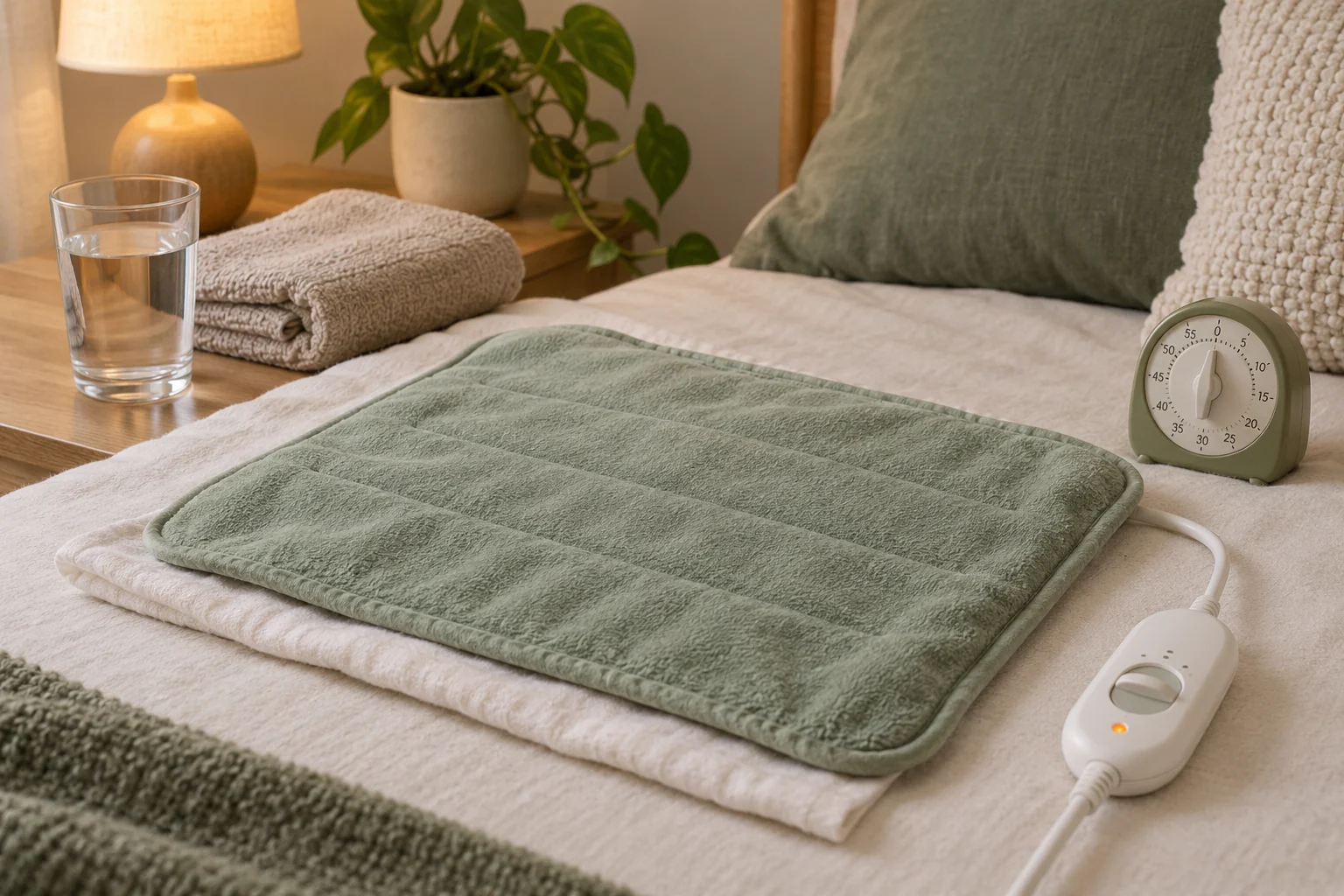
Read the specific manual because pad materials, moisture instructions, timers, and maximum settings differ. Inspect the cord, controller, and fabric before use. Place the pad flat over the intended area instead of folding it or trapping it beneath body weight. A thin layer of clothing or cloth can reduce direct skin exposure if the manual allows it.
Start on low, set a timer, and check the skin frequently. Mayo Clinic guidance for arthritis pain limits heating-pad use to about 20 minutes at a time; the device manual or your clinician may give different limits. Stop for pain, burning, unusual redness, blistering, dizziness, or symptoms that worsen. Allow skin to return to normal before another session.
Do not sleep on or with an active pad
Automatic shutoff is a useful backup, not permission to sleep. Pressure can trap heat, a folded section can heat unevenly, and a sleeping person may not notice a developing burn. Place the pad over the body rather than lying or sitting directly on it, unless the manufacturer explicitly designed and labeled the device for another use.
Keep cords where they will not be pinched by furniture or create a trip hazard. Do not use a pad with a damaged cord, exposed wire, inconsistent controller, burned smell, or unexplained hot spot. Replace it instead of attempting a makeshift electrical repair.
Who should ask a clinician first
Reduced sensation makes it harder to detect excess heat. People with diabetes, neuropathy, poor circulation, paralysis, or altered awareness should get individual advice before using a pad. Extra care is also appropriate during pregnancy, with active cancer treatment, or when applying heat near a recent surgery or medical device.
Do not put a heating pad over broken, infected, numb, or inflamed skin. Never combine it with a medicated patch, topical pain rub, or cream unless a clinician and both product labels say the combination is safe. Several topical analgesic labels specifically warn against added heat because it can increase irritation or burns.
Dry heat, moist heat, and size
Both dry and moist warmth can feel soothing. Moist heat is not automatically better, and water should be added only when the device instructions permit it. A pad should cover the target area without needing to be sharply folded. Larger is useful only if the pad can remain flat and the user can monitor all the skin beneath it.
More temperature settings can make it easier to find a comfortable low level, while an illuminated controller can help in a dim room. A long cord may improve positioning, but it should never run under rugs or cushions. Choose controls you can understand at a glance rather than chasing the highest advertised temperature.
Make heat one part of a plan
For recurring muscle discomfort, a short heat session may be followed by gentle walking, mobility work, or exercises recommended by a health professional. Hydration, sleep, work setup, gradual strength work, and activity pacing can matter more over time than any single device. Stop an exercise that creates sharp or spreading pain.
If heat provides no benefit, do not keep raising the temperature. Different pain sources respond differently, and some need another approach. Track when symptoms occur, what improves them, and whether numbness, weakness, swelling, rash, or fever appears. That information helps a clinician choose the next step.
Quick questions before turning the pad on
Ask whether the pain has a known cause, whether the skin can feel temperature normally, and whether any medicated cream or patch is already on the area. Check that the pad lies flat, the cord is undamaged, and the controller is within reach. Decide when the session will end before you begin.
If any answer raises doubt, pause and read the manual or contact a clinician. A heating pad is easiest to use safely when you are awake, able to move it immediately, and willing to stop even if the timer has not expired.
Sources & medical review basis
- Mayo Clinic: Arthritis pain do’s and don’ts
- Mayo Clinic Health System: Back pain and heat or cold
- Peer-reviewed review: Management of musculoskeletal pain
- MedlinePlus: Warning against direct heat with capsaicin patches
This informational article intentionally contains no affiliate links. Safety directions from the user’s own device and clinician take priority.
