
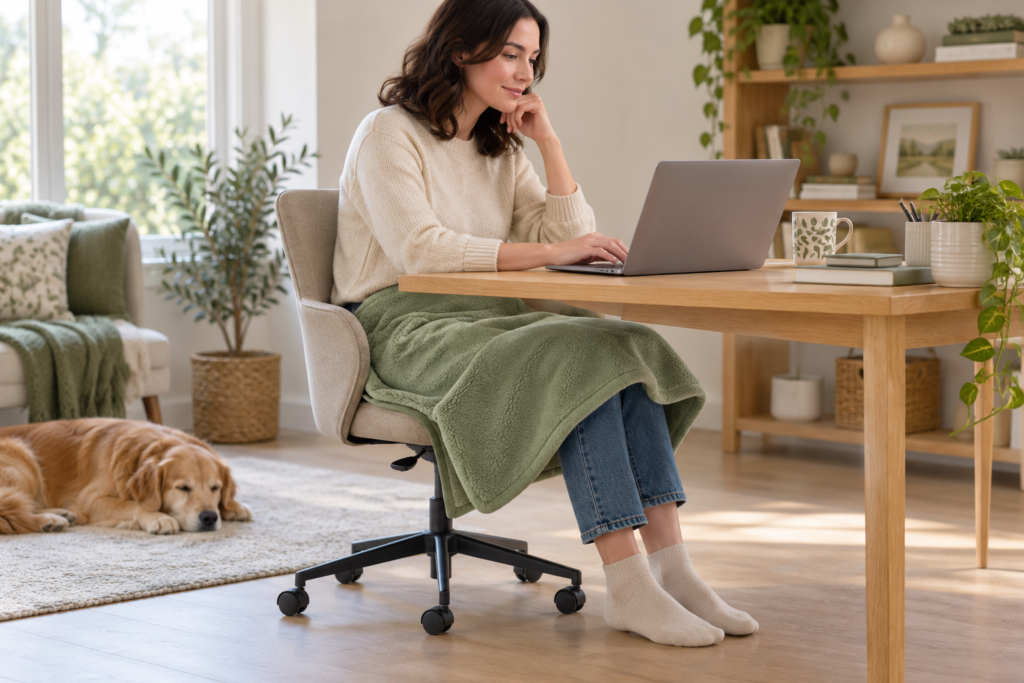
How to Use a Lap Blanket at a Desk Without Tangles
Reviewed and updated: October 30, 2026
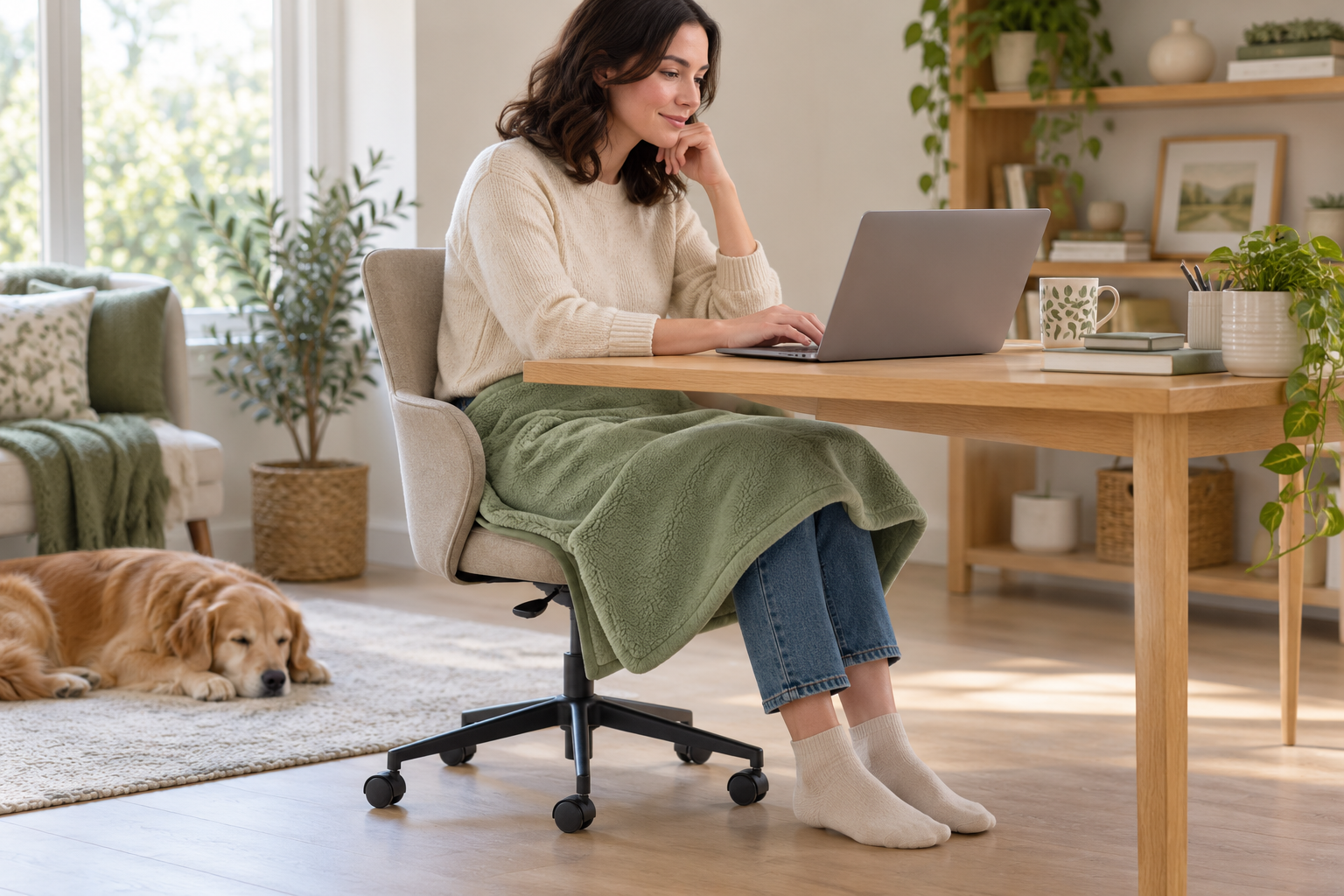
A lap blanket can make a cool desk more comfortable without adding another electrical appliance. It works best when it stays on the lap, leaves room for movement, and can be put away easily. A blanket that drags across chair wheels or covers a power supply creates a different problem from the one it solves. Before choosing a heavier or larger blanket, look at the workspace itself.
This guide concerns an ordinary, unheated lap blanket. Electrically heated throws have separate instructions and should never be treated as interchangeable. The simplest setup uses a manageable piece of washable fabric, a clear floor, and a chair that still moves freely. Comfort should make a working day easier, not keep you fixed in an awkward position.
Check the temperature and the workspace first
Notice when you feel cold and whether the room has an obvious draft. A poorly placed fan or an open window may be easier to adjust than a blanket arrangement. Keep shared-office temperature decisions considerate and follow workplace rules. Make sure the chair height, foot support, and clothing are comfortable before adding another layer. A blanket will not correct a seat that forces the legs into a cramped position. Persistent, unusual, painful, or one-sided coldness deserves appropriate medical advice rather than increasingly intense warming. For ordinary cool-room comfort, begin with normal clothing and a light layer you can remove quickly when conditions change.
Choose a size that stays above the floor
Sit normally, place a folded blanket over the thighs, and check where its edges fall. The front should stay well away from chair casters and the sides should not trail into drawers or pedals. A full bed blanket often creates unnecessary bulk at a desk. Fold it smaller only if the folds remain stable and easy to remove; otherwise choose a smaller blanket already in the home. Do not tie the blanket to the chair or around the body to keep it in place. It should lift away in one movement when you stand. Check the arrangement again after rolling backward, because the edge can shift when the chair moves.
Consider fabric, weight, and care together
A smooth fabric that does not shed heavily is easier to keep away from keyboard openings and chair mechanisms. Choose a weight you can reposition comfortably rather than assuming heavier means better. Read the care label and think about how often the blanket will need washing. Some wool and specialty fabrics require more care than a simple machine-washable throw. Avoid a material that irritates your skin or catches on clothing. Strong scent, static, and loose fringe can also become distracting during a long sitting session. A plain, manageable blanket that dries fully between washes often fits a desk routine better than an elaborate decorative throw.
Keep electricity and ventilation uncovered
Leave computer power supplies, chargers, extension connections, heater vents, and laptop ventilation openings outside the blanket. Do not drape fabric over a tower computer, a desk heater, or a charging device to make the area feel warmer. Route existing cables where they cannot catch on the blanket when you stand. Use equipment according to its instructions and the office’s electrical rules. This is especially important with standing-desk controls and foot-operated accessories. If a cable crosses the space where the blanket naturally falls, reorganize the cable safely before using the blanket. Covering a warm component is not a practical way to reclaim the heat it produces.
Arrange the blanket while sitting normally
Sit with your back supported and place the blanket lightly across the thighs. Leave the knees and feet free to change position. Do not tuck the edges tightly beneath the body or wrap them around the lower legs. A tight arrangement can discourage movement and make getting up awkward. Keep the hem clear of drawer handles, chair adjustment levers, and any footrest hinge. Then practice removing it and standing once, with the floor in view. If the blanket slides immediately, reduce its size or adjust the fold instead of clipping it to the chair. A setup that needs constant restraint is probably too cumbersome for that workspace.
Plan where it goes when you stand
Choose a clean shelf, basket, or hook that is within easy reach and away from heat sources. Put the blanket there before leaving the chair, rather than dropping it on the floor or over a computer. A small storage basket also makes it easier to notice spills, loose threads, or dirt. Avoid hanging a heavy blanket from a rolling chair where it may reach the wheels. In a shared workspace, keep personal textiles separate and follow any hygiene or storage policy. If the blanket is damp from a spill, remove it from use until it has been cleaned and dried according to its label.
Make movement part of the arrangement
A blanket should not become a reason to remain seated for an entire morning. Use your usual breaks to stand, walk, and change position as appropriate for your circumstances. Remove the blanket first and check the floor before rolling the chair. If a mobility aid, medical device, or assistance animal uses the same space, keep that route completely clear and ask a relevant professional for individual setup advice when needed. Avoid arranging the fabric so it hides your feet or obstacles during transfers. A comfortable desk is one you can enter, use, and leave without having to untangle layers every time.
Wash and inspect it regularly
Follow the blanket’s actual care label for washing temperature, detergent, drying, and any restrictions. Remove crumbs and loose debris before storing it, and keep food spills from sitting unnoticed in folds. Check seams, fringe, and loops for damage that could snag on furniture. Let the blanket dry fully before putting it in a closed basket. If it develops a persistent odor, identify the cause instead of masking it with fragrance. Shared blankets need a clear cleaning routine and should not be passed between people without considering hygiene and allergies. Retire a damaged blanket from desk use if it cannot be kept safely clear of moving parts.
Keep heated products on their own rules
Do not add an electric heating pad beneath an ordinary lap blanket unless that exact device’s instructions explicitly permit the arrangement. Covering a heating product can change how heat escapes. The guide to positioning a heating pad safely addresses a different kind of equipment and its precautions. Similarly, storage instructions for electrical products do not replace the wash label on an ordinary textile. If you want to compare reusable warming formats, read the microwavable heat-wrap guide before assuming all sources of warmth can be layered together. Keep each product within its intended use.
Use a quick end-of-day reset
Remove the blanket, inspect the floor and chair wheels, and fold it in its chosen storage spot. Check whether the arrangement stayed comfortable without repeated tugging. If not, change one thing the next day: a smaller fold, lighter fabric, or better storage location. There is no need to build an elaborate ritual around a simple layer. The useful standard is that the blanket stays clean, leaves equipment ventilated, keeps moving parts clear, and can be removed easily. Once those details work, a lap blanket can remain a quiet convenience rather than another object that makes the desk harder to use.