
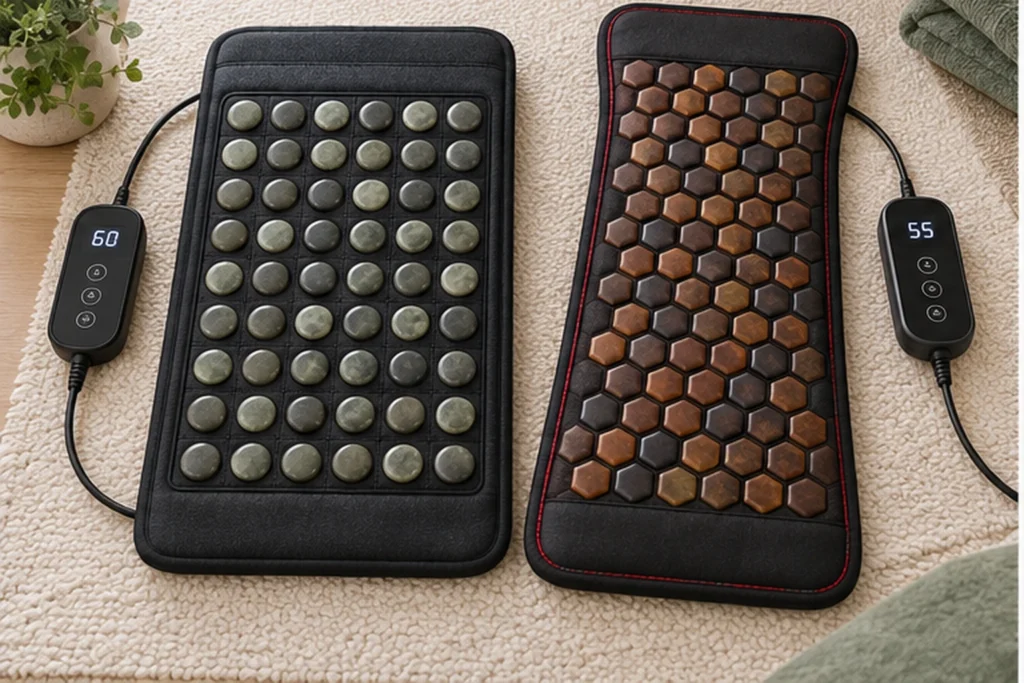
Best Infrared Heating Pads: How to Compare Current Models
Reviewed and updated: October 4, 2026
Quick take: Compare infrared pads by verified instructions, usable temperature control, timer and shutoff behavior, size, weight, flexibility, cover, warranty, return policy, and independent safety certification where applicable. Avoid disease-treatment promises and vague claims about detoxification or deep healing.
The practical answer
Infrared pads still warm tissue and can burn skin. The safest choice is easy to control, fits flat, and comes from a seller and manufacturer that provide model-specific support.
Compare infrared pads by verified instructions, usable temperature control, timer and shutoff behavior, size, weight, flexibility, cover, warranty, return policy, and independent safety certification where applicable. Avoid disease-treatment promises and vague claims about detoxification or deep healing.
What this review can and cannot tell you
Infrared pads still warm tissue and can burn skin. The safest choice is easy to control, fits flat, and comes from a seller and manufacturer that provide model-specific support. Product names often remain in search results after packaging, controllers, and seller bundles change. This update therefore emphasizes the checks that remain useful even when inventory changes. A heating product can provide temporary comfort, but it does not diagnose an injury or establish that a symptom is safe to treat at home.
Confirm the listing before you compare prices
Match the manufacturer, complete model number, dimensions, voltage, controller, cord, cover, and included accessories. Look for a downloadable manual, reachable customer support, a clear warranty, and a return policy. Marketplace reviews may combine several sizes or generations, so filter them carefully and do not assume every photo shows the item being sold.
Choose fit and controls before maximum heat
The pad should cover the intended area while remaining flat and comfortable. A readable controller, distinct settings, a reachable off switch, and an automatic shutoff are more useful than an unusually high maximum temperature. People with limited hand strength or vision should test whether the control is understandable before regular use.
Use heat as a short, supervised comfort measure
Read the model-specific instructions from start to finish. Inspect the fabric, seams, connector, cord, and controller. Use the supplied cover or permitted clothing layer, stay awake, and begin with the lowest comfortable setting. Check the skin regularly and stop for burning, numbness, mottling, swelling, dizziness, or pain that increases.
Situations that need extra caution
Do not place ordinary electric pads under the body, fold them, trap them beneath tight bedding, or use them while sleeping unless the product is explicitly designed and instructed for that purpose. Reduced sensation, poor circulation, fragile skin, sedating medicine, pregnancy, childhood, and some medical conditions can change whether heat is appropriate; ask a clinician when uncertain.
When heat is the wrong next step
Avoid self-treating a fresh swollen injury, active bleeding, an infected area, numb skin, or unexplained severe symptoms with heat. Seek prompt care for major trauma, new weakness, spreading numbness, chest pain, breathing trouble, severe abdominal pain, fever, a hot red joint, rapidly increasing swelling, or loss of bladder or bowel control.
How to judge value over time
Record the setting, session length, skin response, and whether a practical task became easier afterward. Also track cleaning, cord wear, controller behavior, and hot spots. A product that requires constant repositioning or higher settings is not a good fit, even if it has attractive materials or many advertised features.
Four checks before buying
- Exact model and instructions
Follow the model-specific instructions. - Adjustable, reachable controls
Follow the model-specific instructions. - Flat fit without trapped heat
Follow the model-specific instructions. - Automatic shutoff and warranty
Follow the model-specific instructions.
A sensible first session
Set up the pad while it is unplugged, keep it flat, connect it exactly as directed, and sit where the controller remains reachable. Start low while awake, check the skin, and end the session before warmth becomes intense.
Change one variable at a time. If the result is uncomfortable, solve the cause rather than adding intensity, more passes, a stronger product, or a longer session.
Safety note
Heat can cause burns and may be inappropriate for some symptoms or health conditions. Follow the current manual and seek qualified advice when sensation, circulation, pregnancy, age, medication, or unexplained symptoms raise concern.
Check current availability
01
Model discussed in this guide
far infrared heating pad current models
A far-infrared-pad option when you prefer that format and its weight suits your planned attentive sessions.
Find in Amazon (paid link)
Frequently asked questions
Should I choose the strongest or most powerful option?
No. Choose the lowest intensity and simplest feature set that reliably accomplishes the intended job.
What makes a listing trustworthy?
Look for a traceable manufacturer, exact model information, complete instructions, warranty details, a clear return policy, and realistic claims.
When should I replace the product?
Replace damaged, contaminated, overheating, leaking, misaligned, or unsupported equipment. Do not improvise repairs to electrical or cutting components.